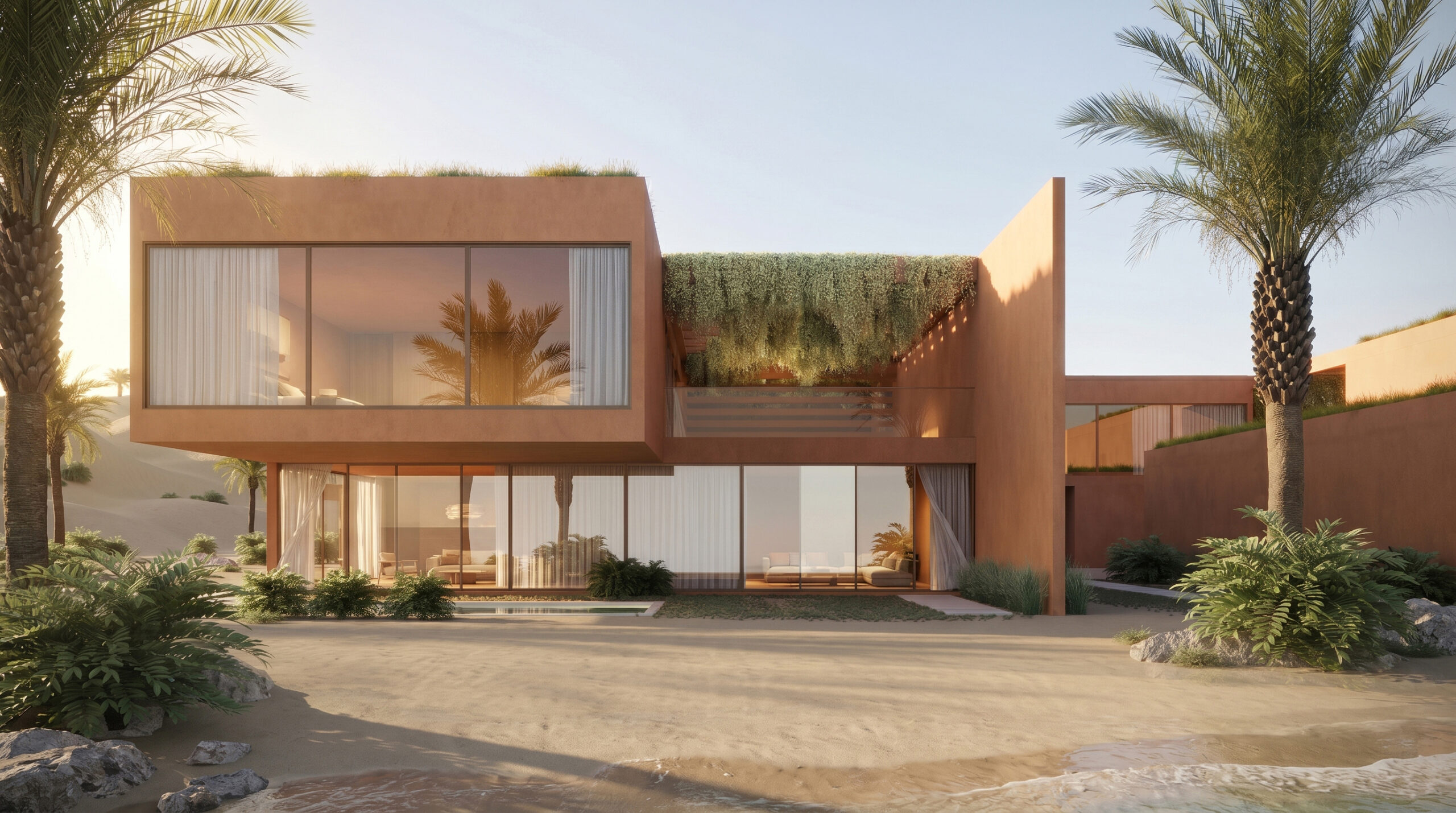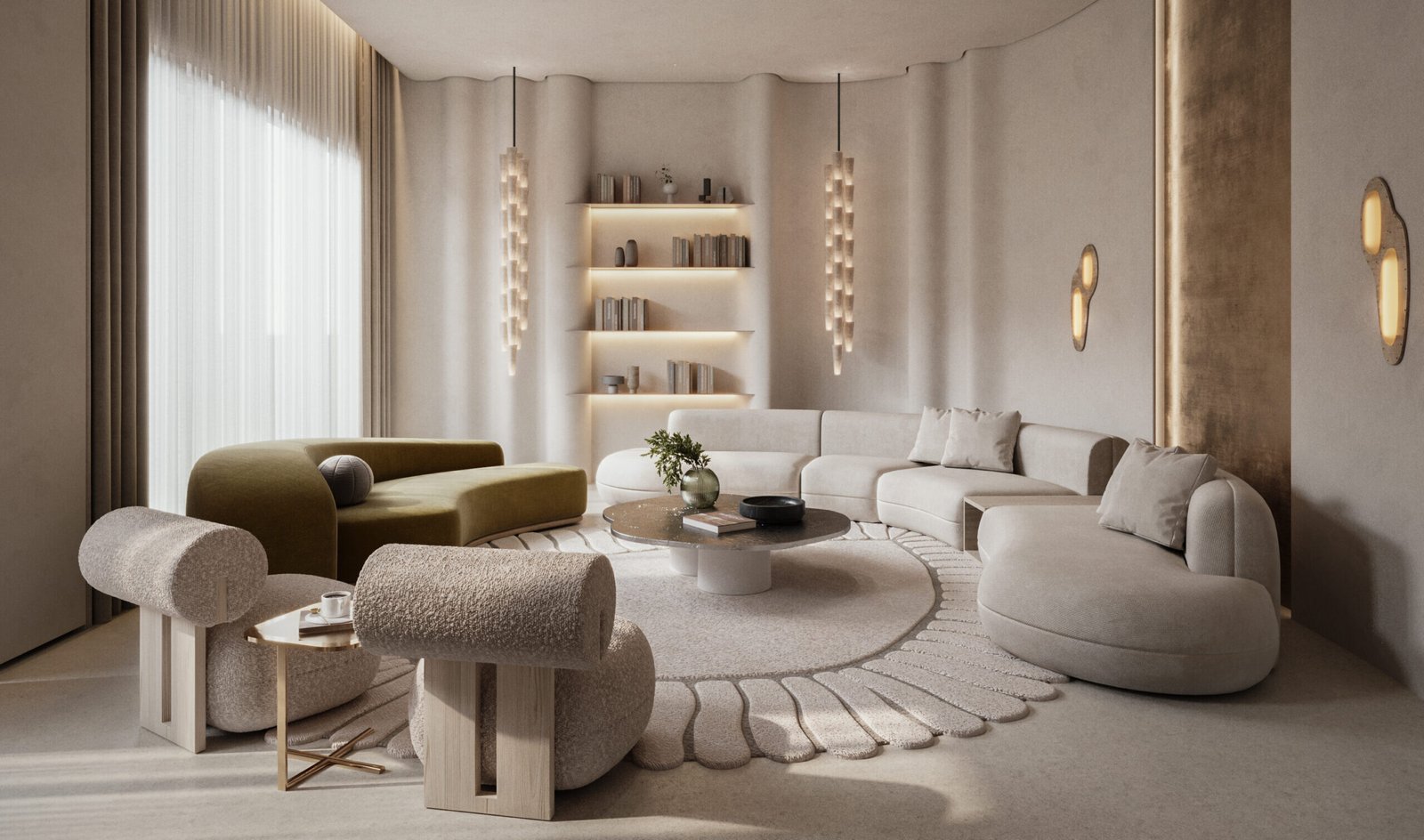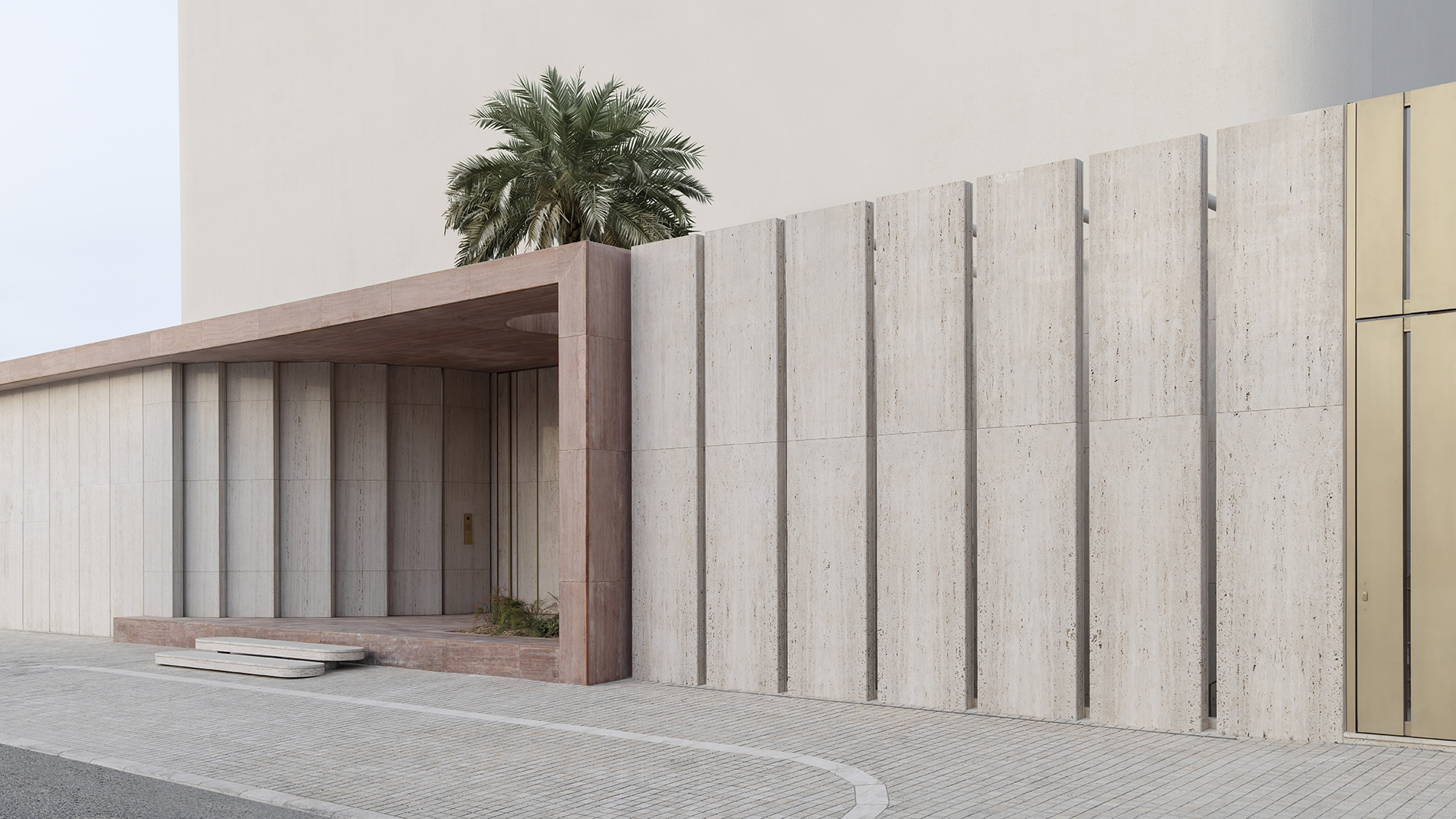
Plinth House is a private villa set on a 3,500 sqm plot emplaced by the sea side, conceived as a dialogue between restraint and expression. The architecture rests on a sculpted travertine base that anchors the house to the ground, while the upper volume remains minimal, calm, and deliberately understated. Completed in 2025, the project was developed by Cambra Buró under a full architectural and landscape scope, resulting in a villa defined by clarity above and depth below—grounded, crafted, and quietly powerful.


Designed as a forward-thinking residential project, Plinth House integrates sustainability as a core architectural principle. The villa is constructed using exclusively sustainable materials, combined with a high-performance MEP system that significantly reduces energy consumption. Solar panels support the building’s energy demand, while greywater recovery systems allow for the reuse of water from showers and daily use.
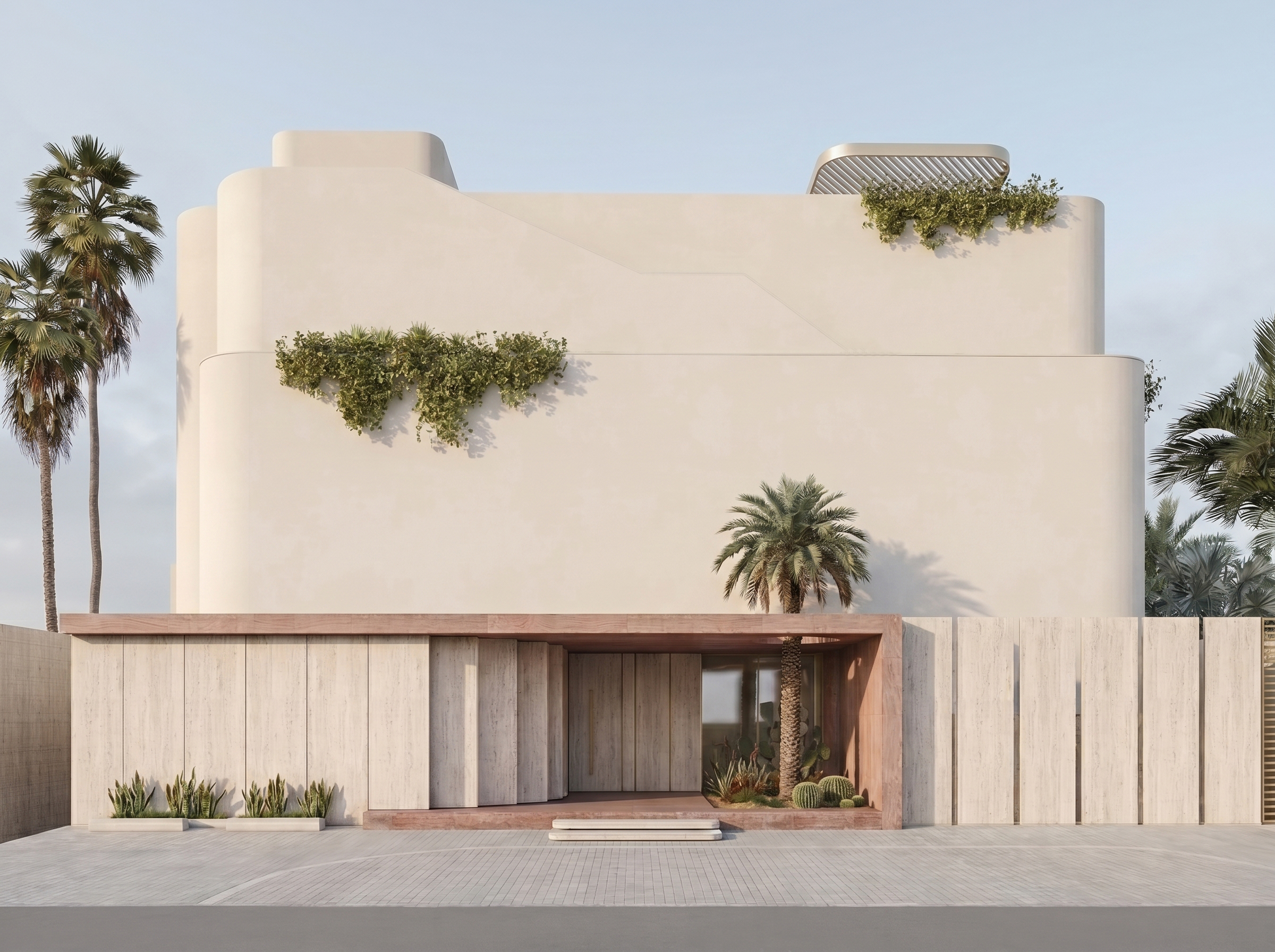
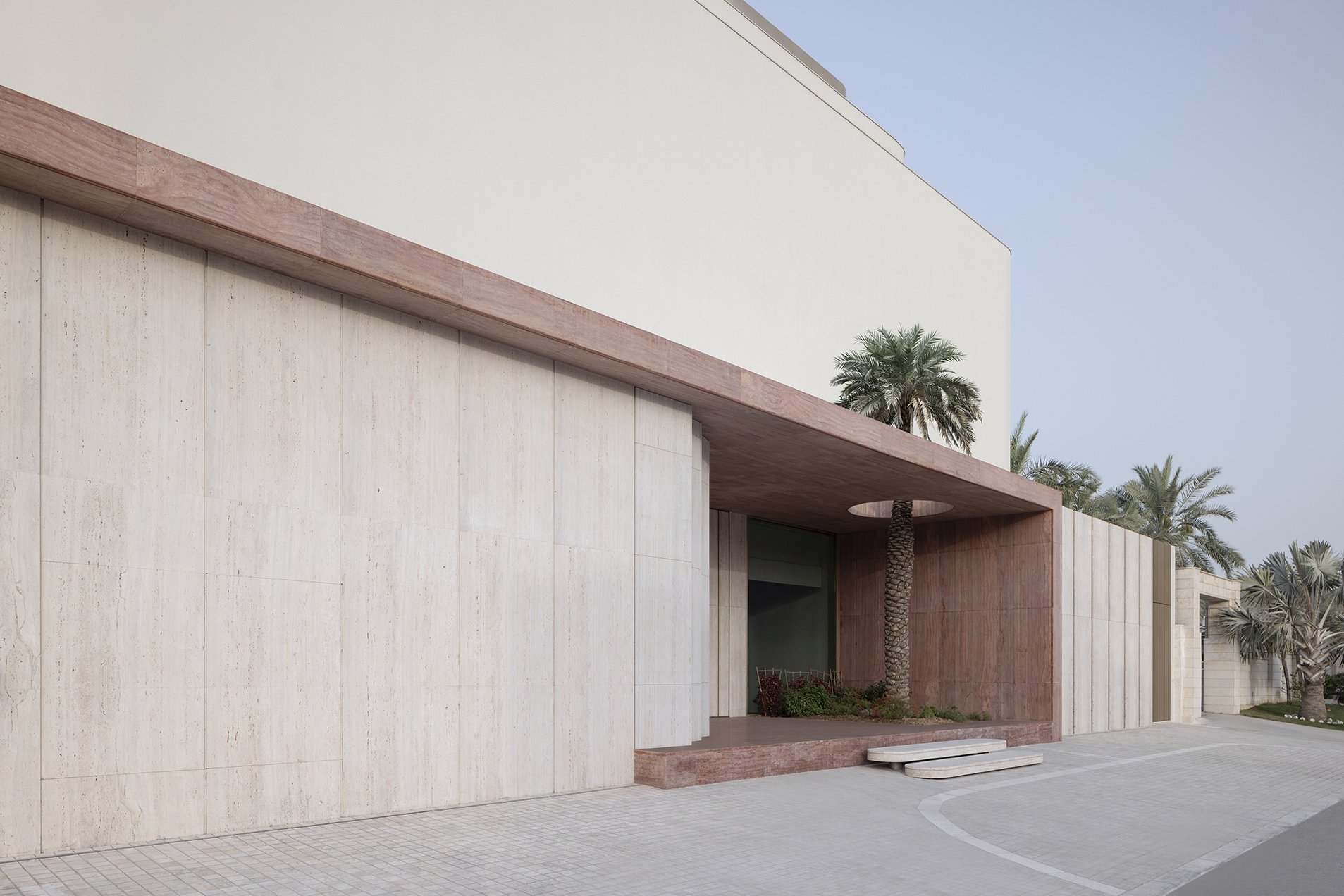
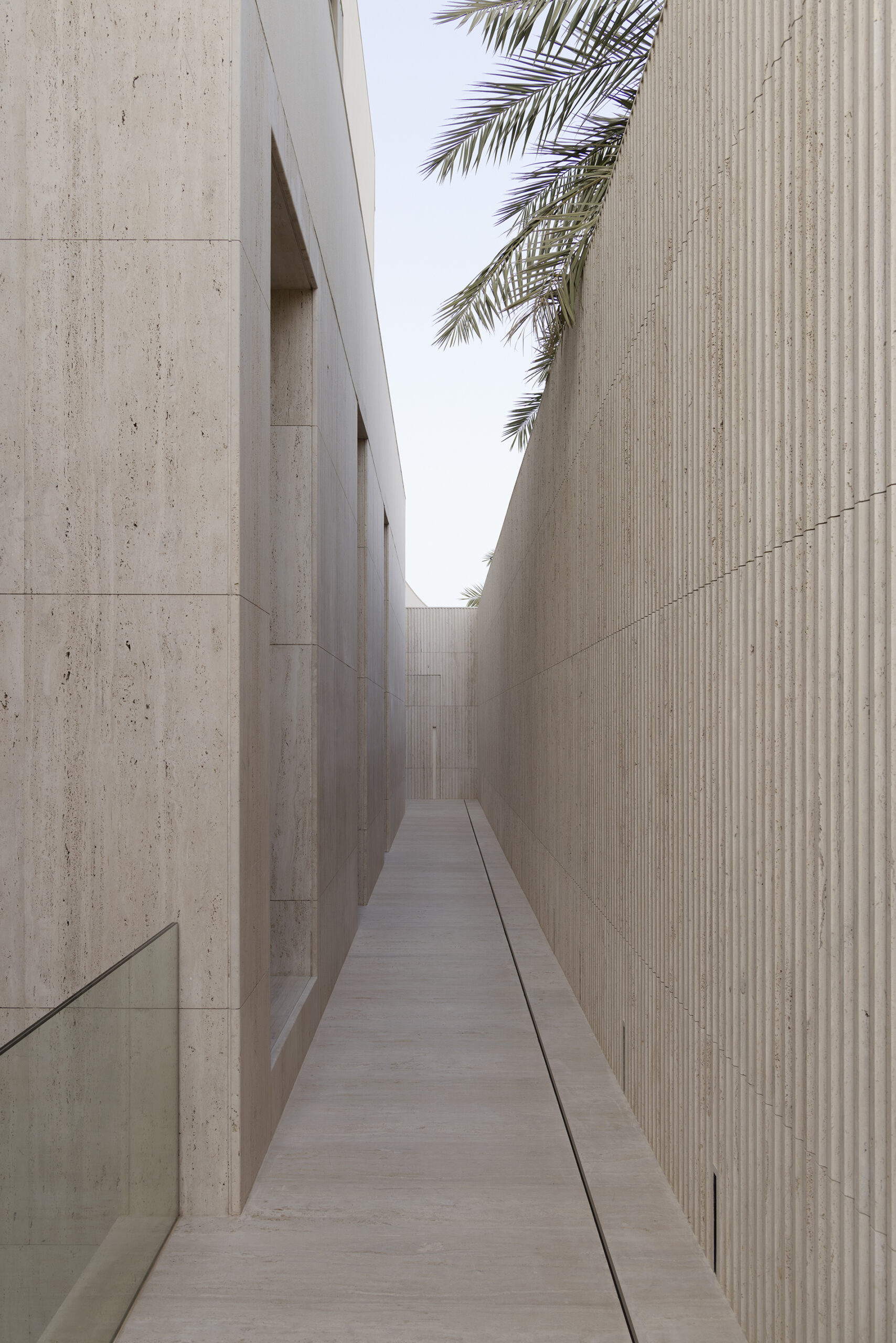
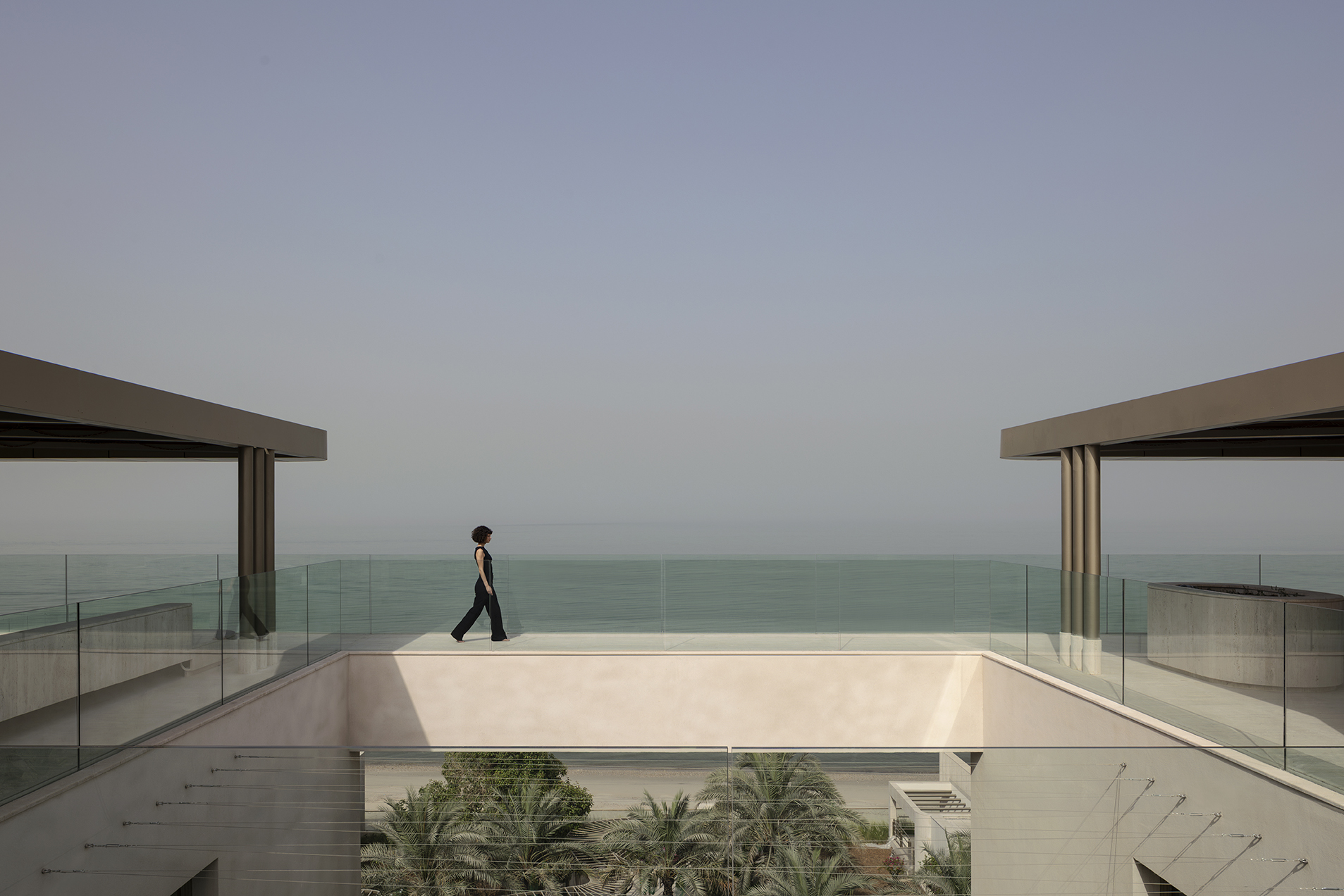
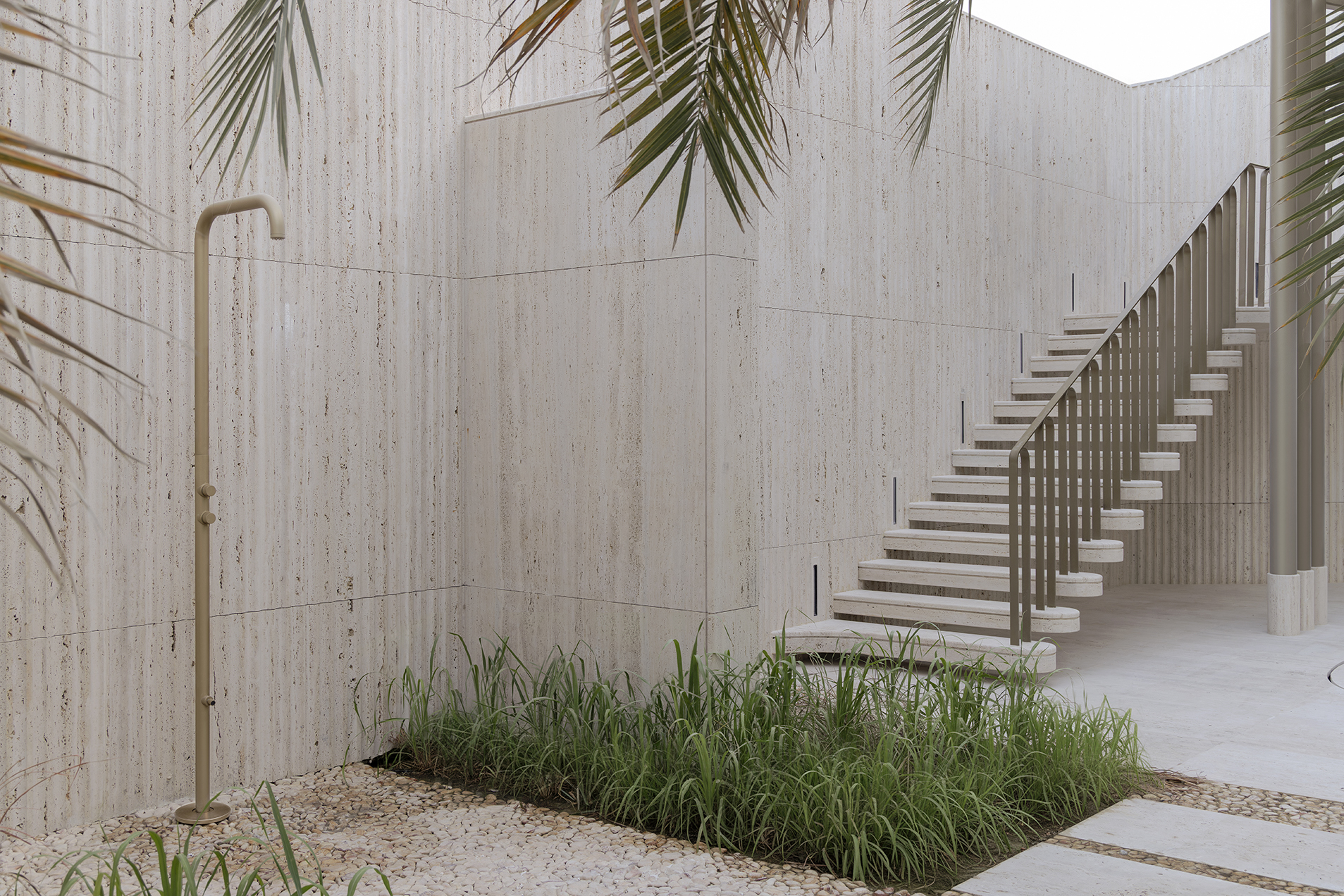
The exterior is planned as a sequence of shaded moments. Terraces, canopies, stairs and planting extend the house outward, so movement between interior and landscape feels continuous.
Custom outdoor elements reinforce the architectural identity of the villa. As a result, the exterior feels crafted rather than assembled from standard details.
The outdoor spaces are conceived as generous, spatial sequences where architecture and landscape merge seamlessly. A sculptural staircase appears to float 1.40 meters above the ground, reinforcing the sense of lightness and continuity throughout the exterior circulation.
Integrated outdoor showers and custom designed equipment extend daily life into the open air, blurring the boundary between interior and exterior.
All exterior finishes and elements are entirely bespoke, developed specifically for this villa. From materials to detailing, every component was custom-designed and crafted, resulting in a language that cannot be sourced or replicated from standard market solutions.
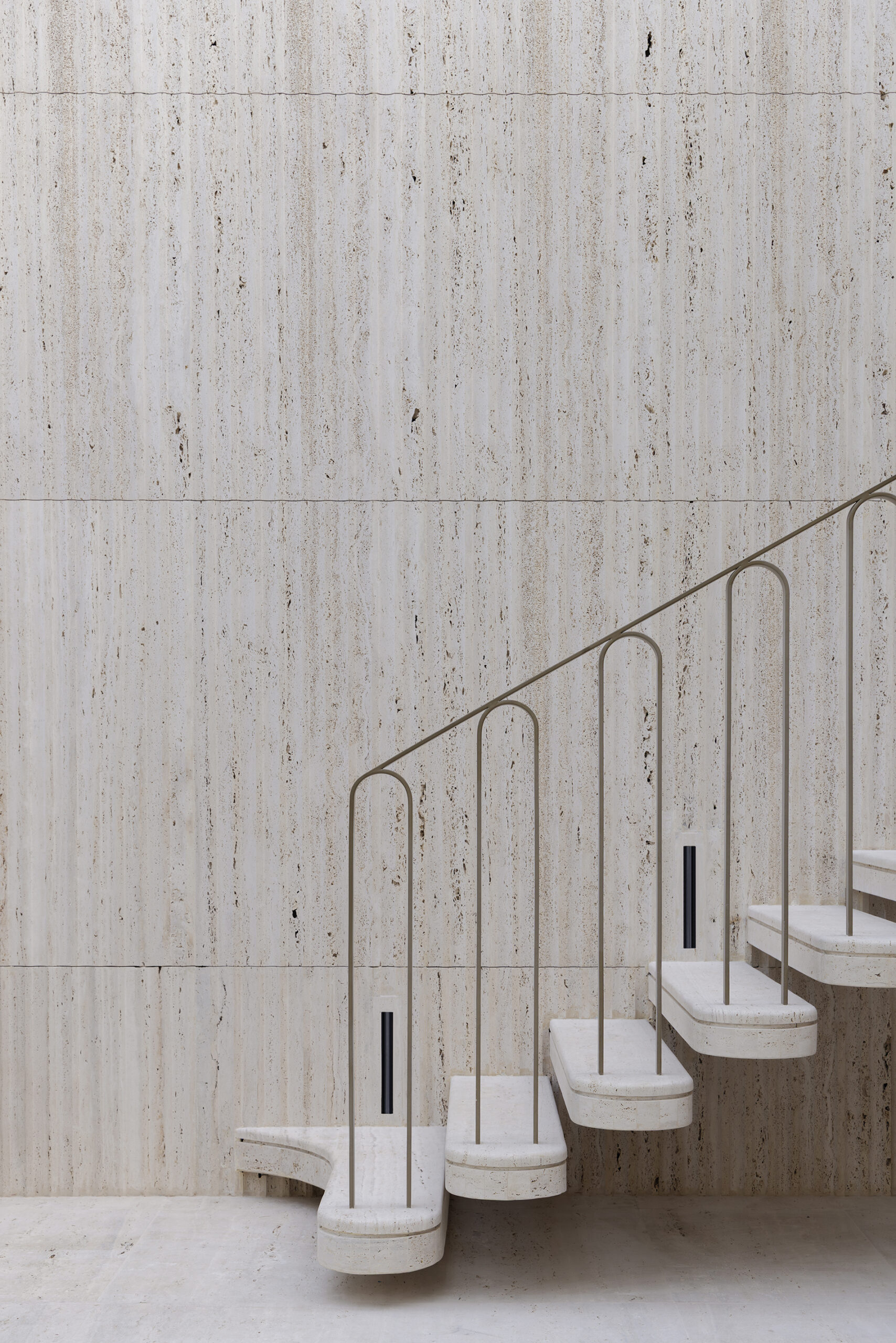
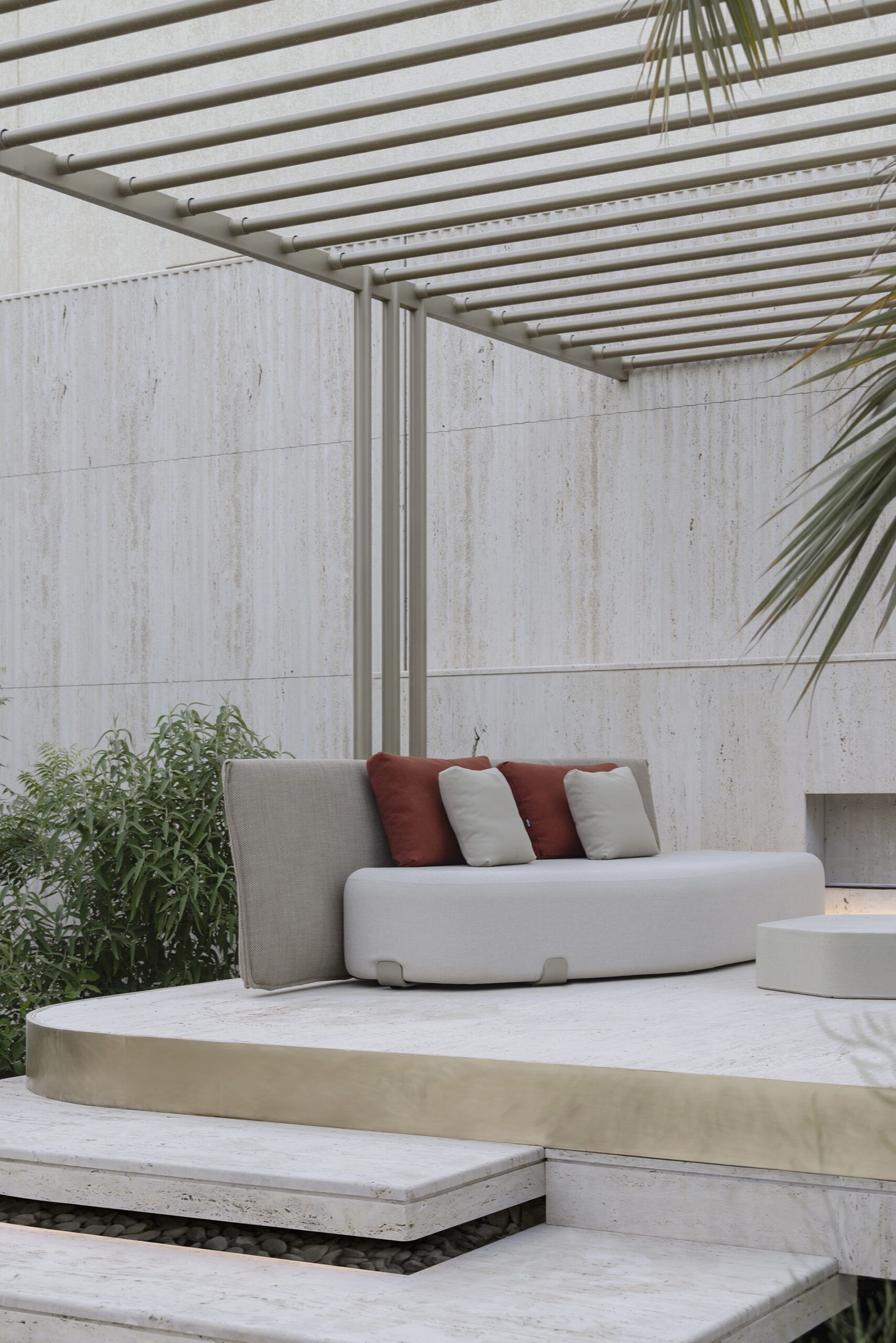
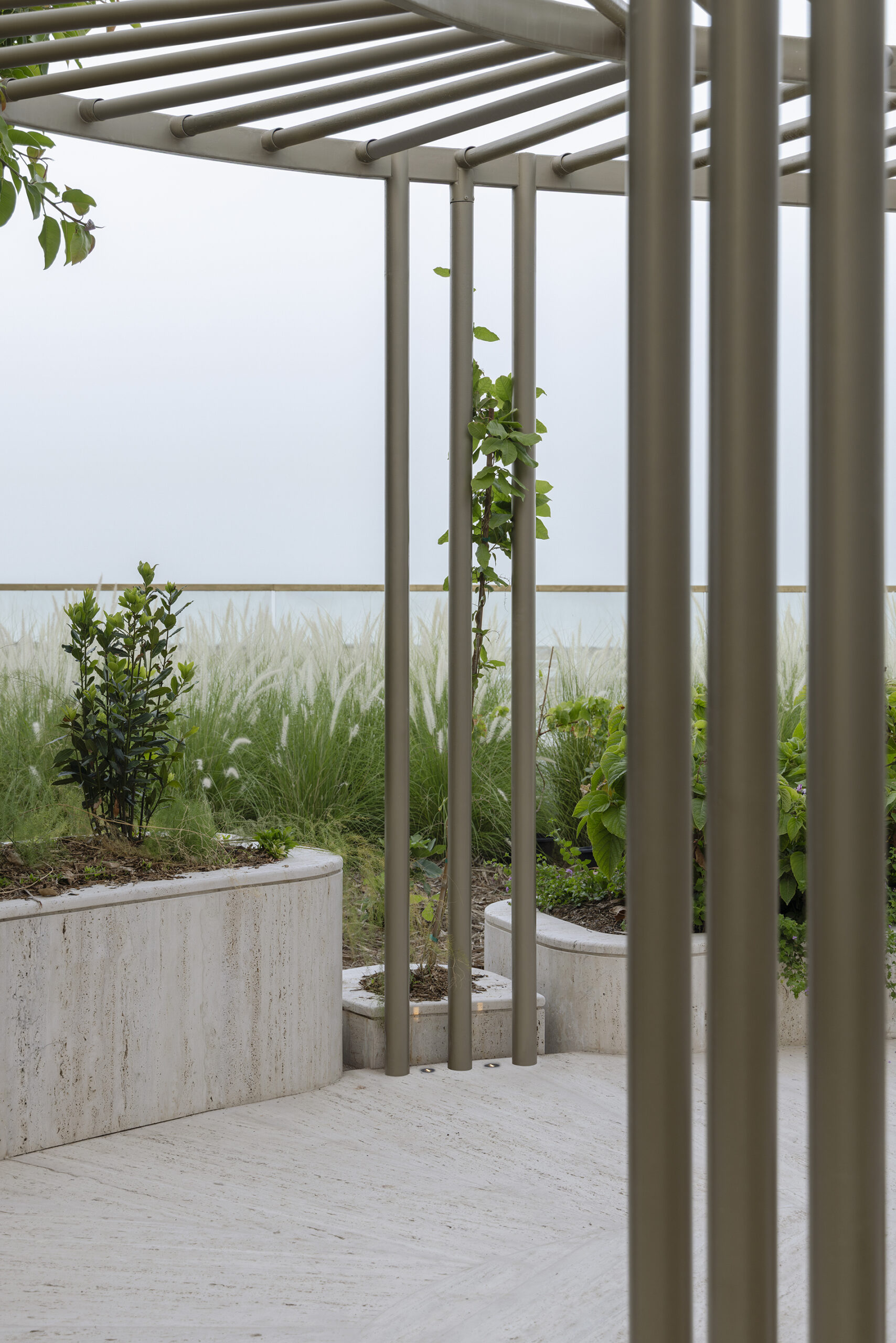
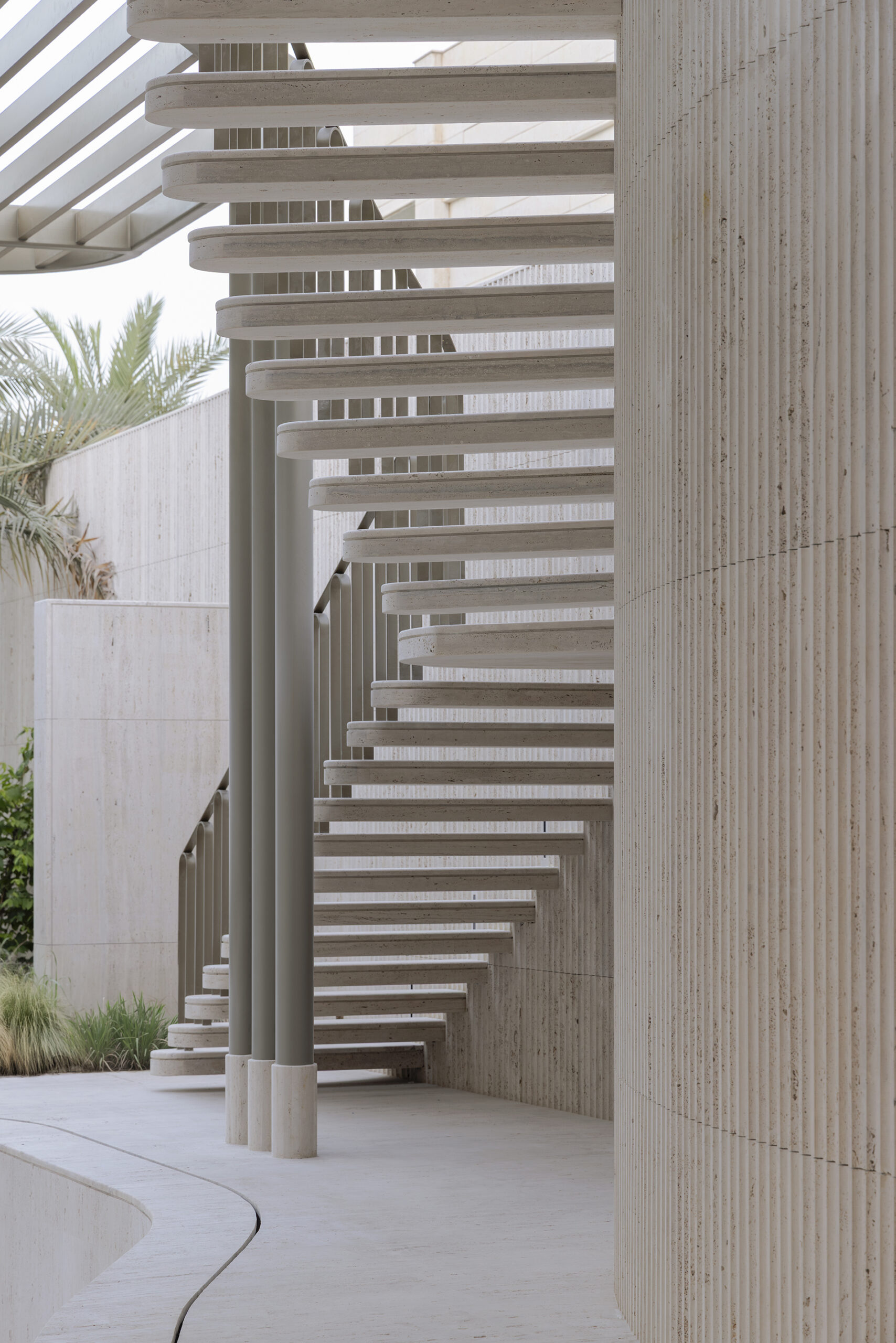
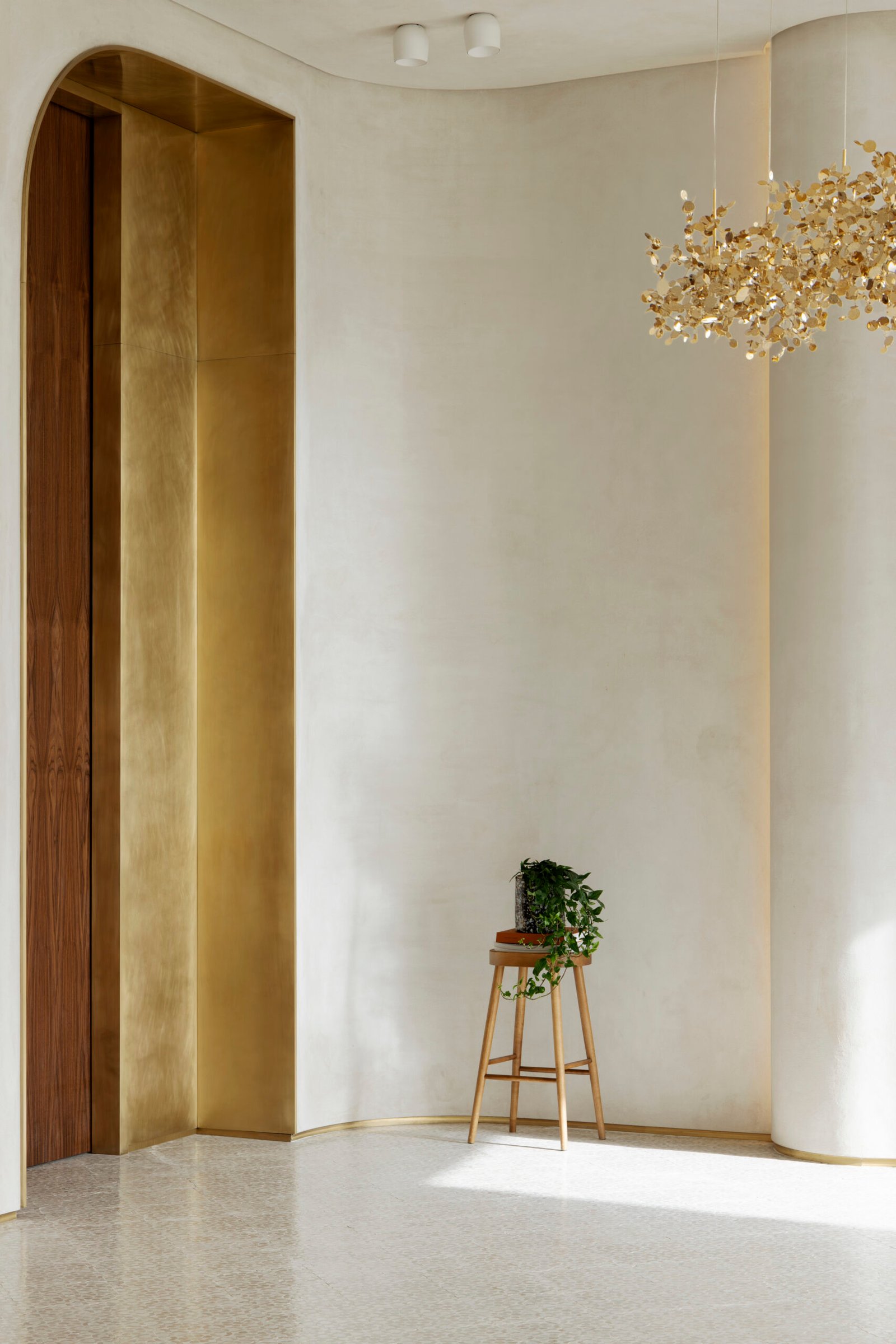
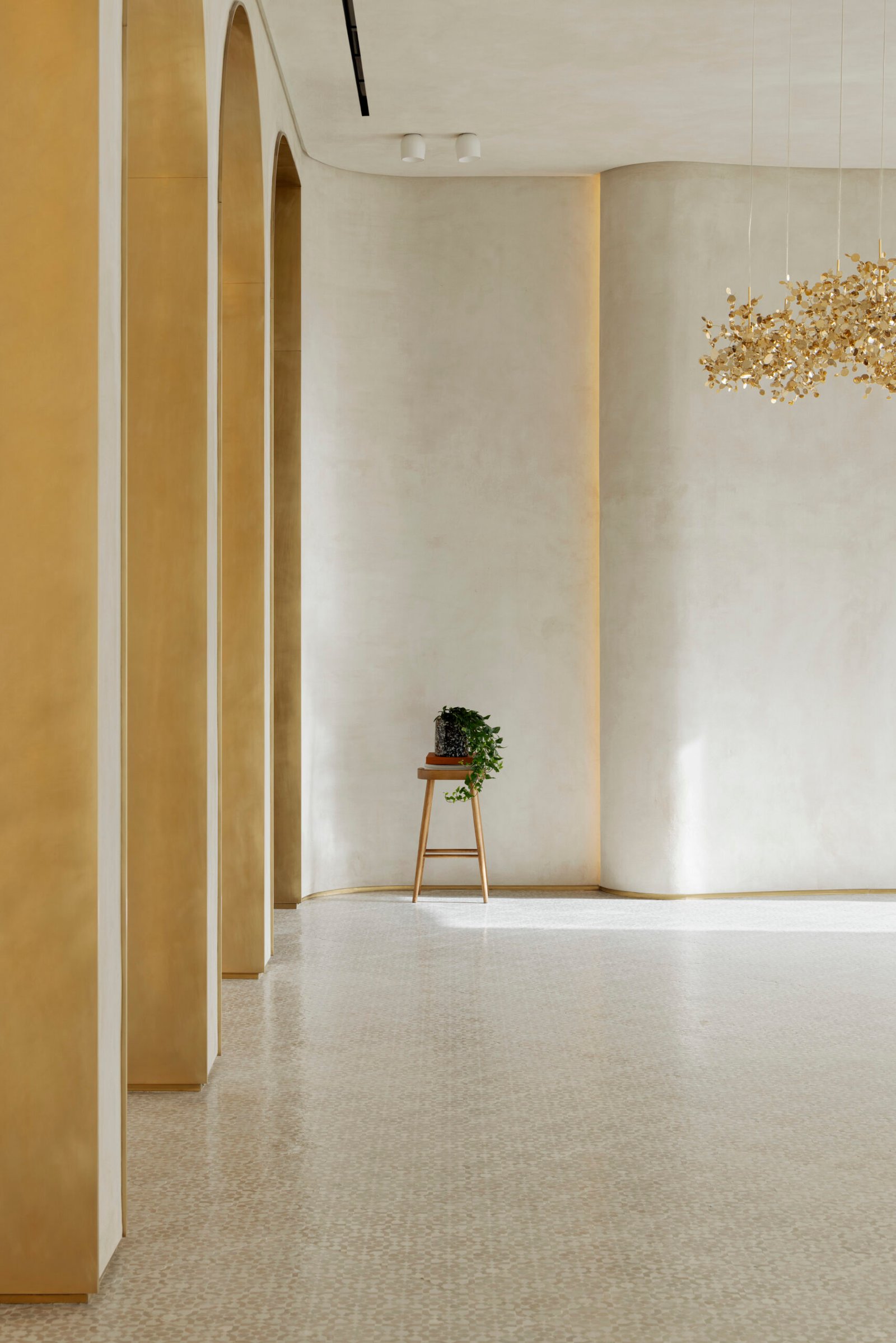
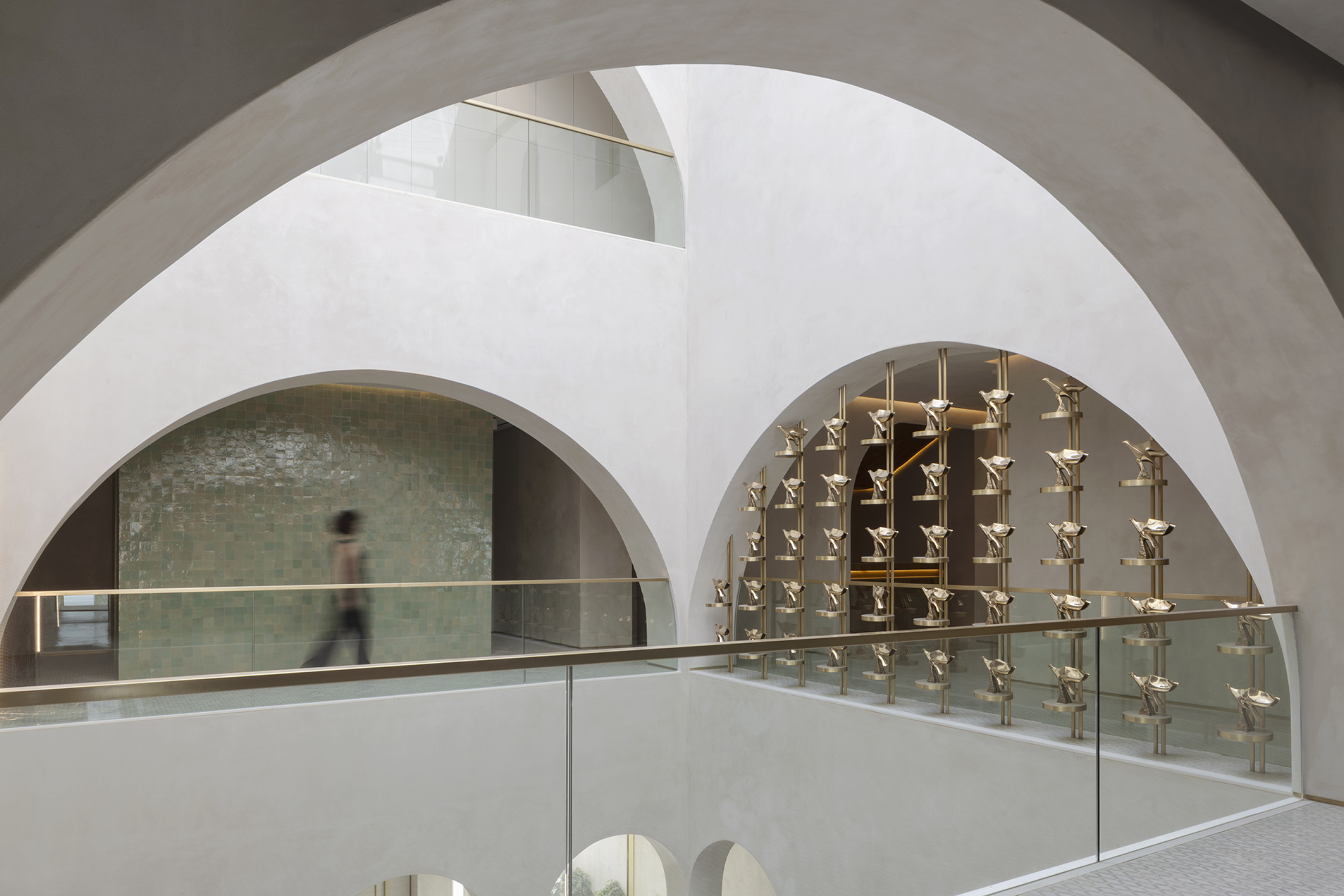
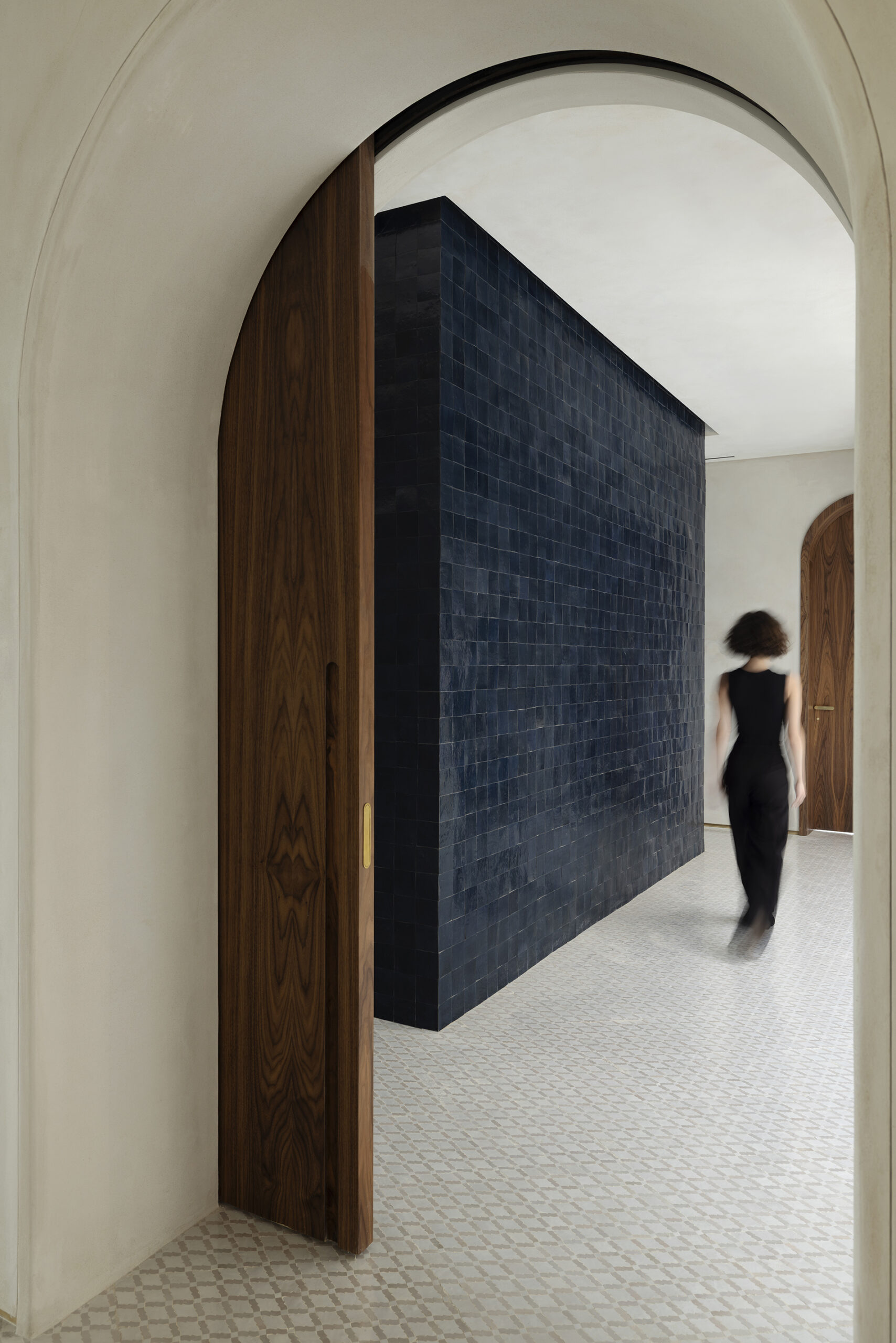
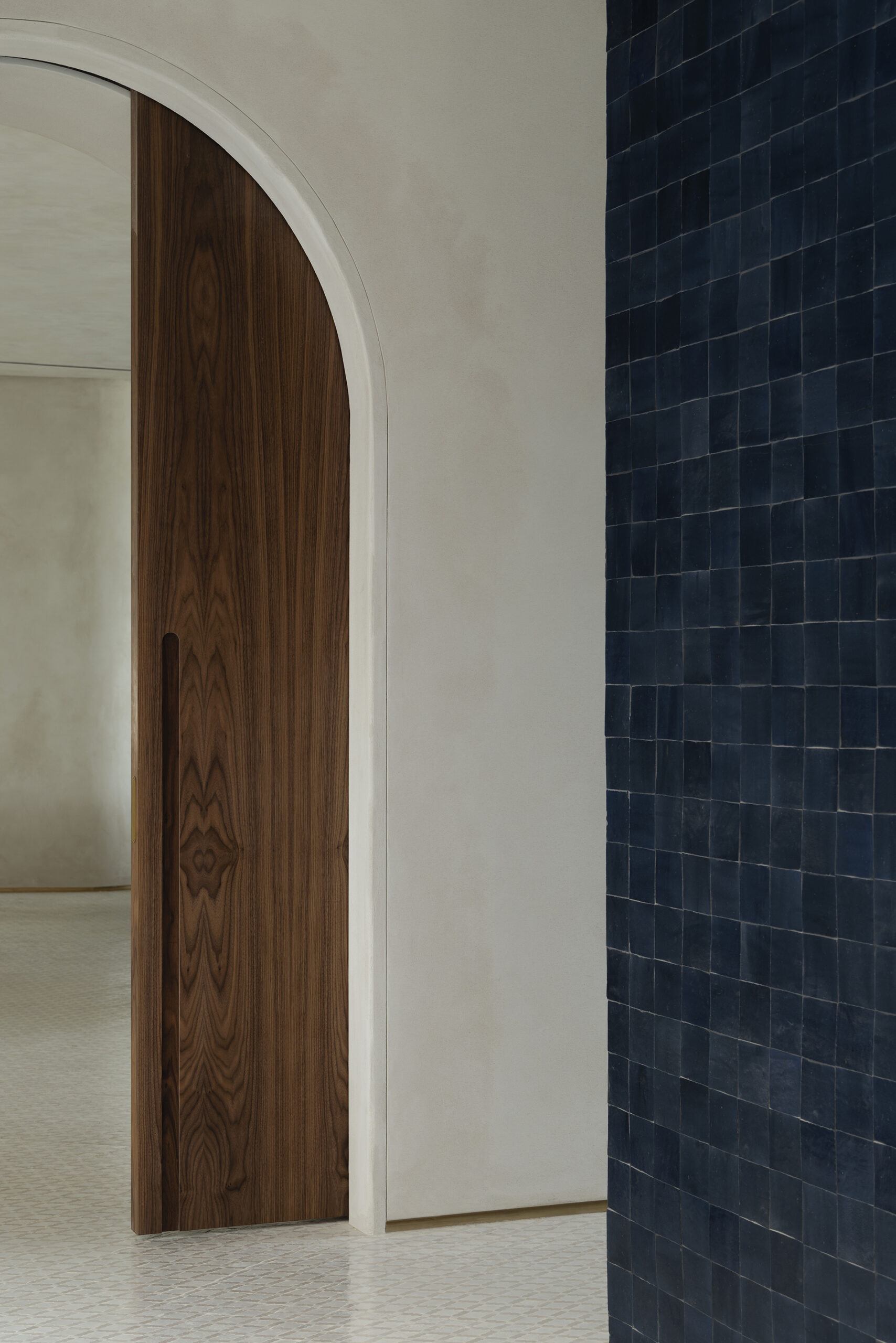
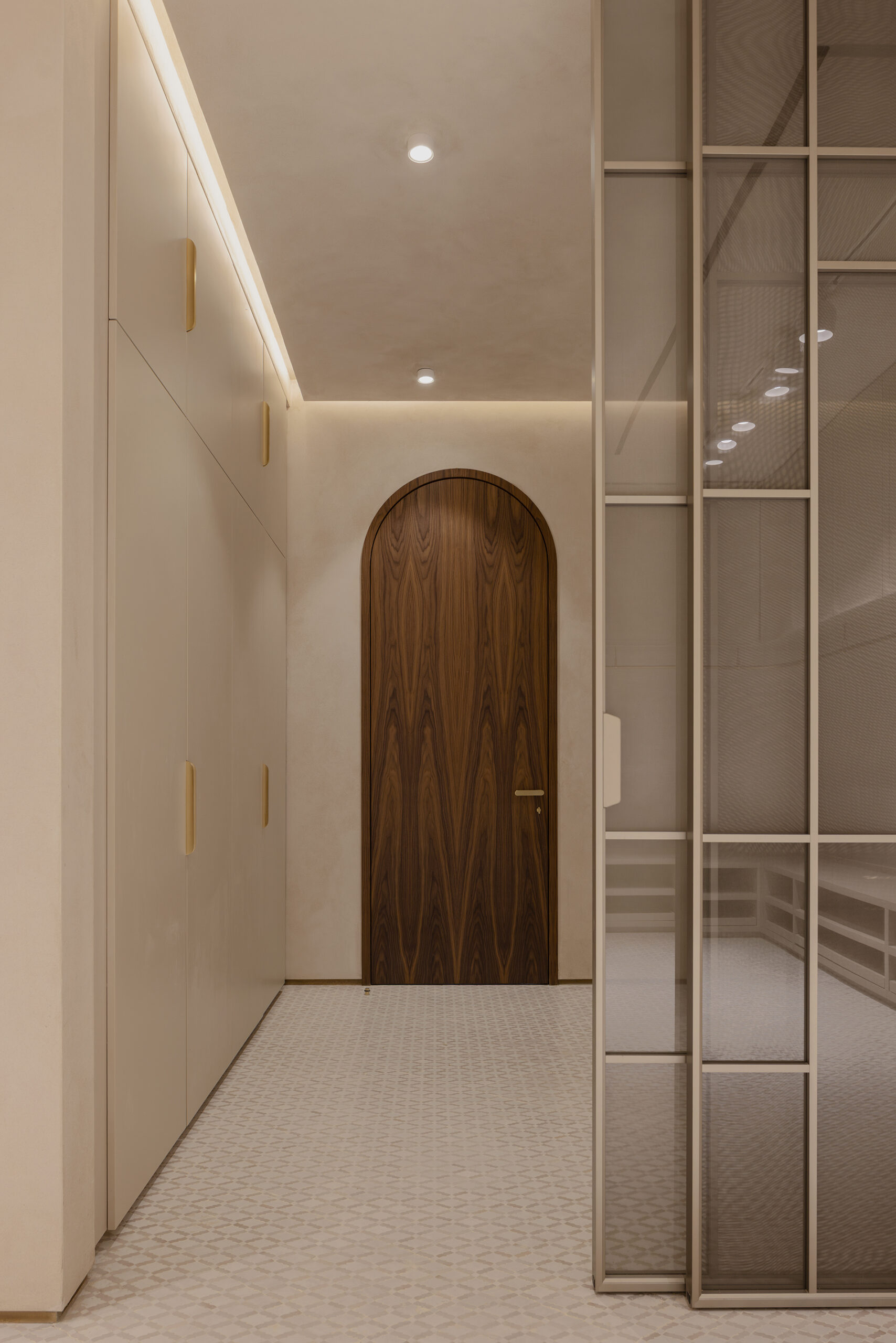
The sequence unfolds through shifting perspectives, where movement reveals changing spatial scenarios. Curved back walls generate subtle vertical waves, softening the rhythm of arches and amplifying depth. Each view is carefully framed, offering moments of compression and release that heighten the experience of scale and light.
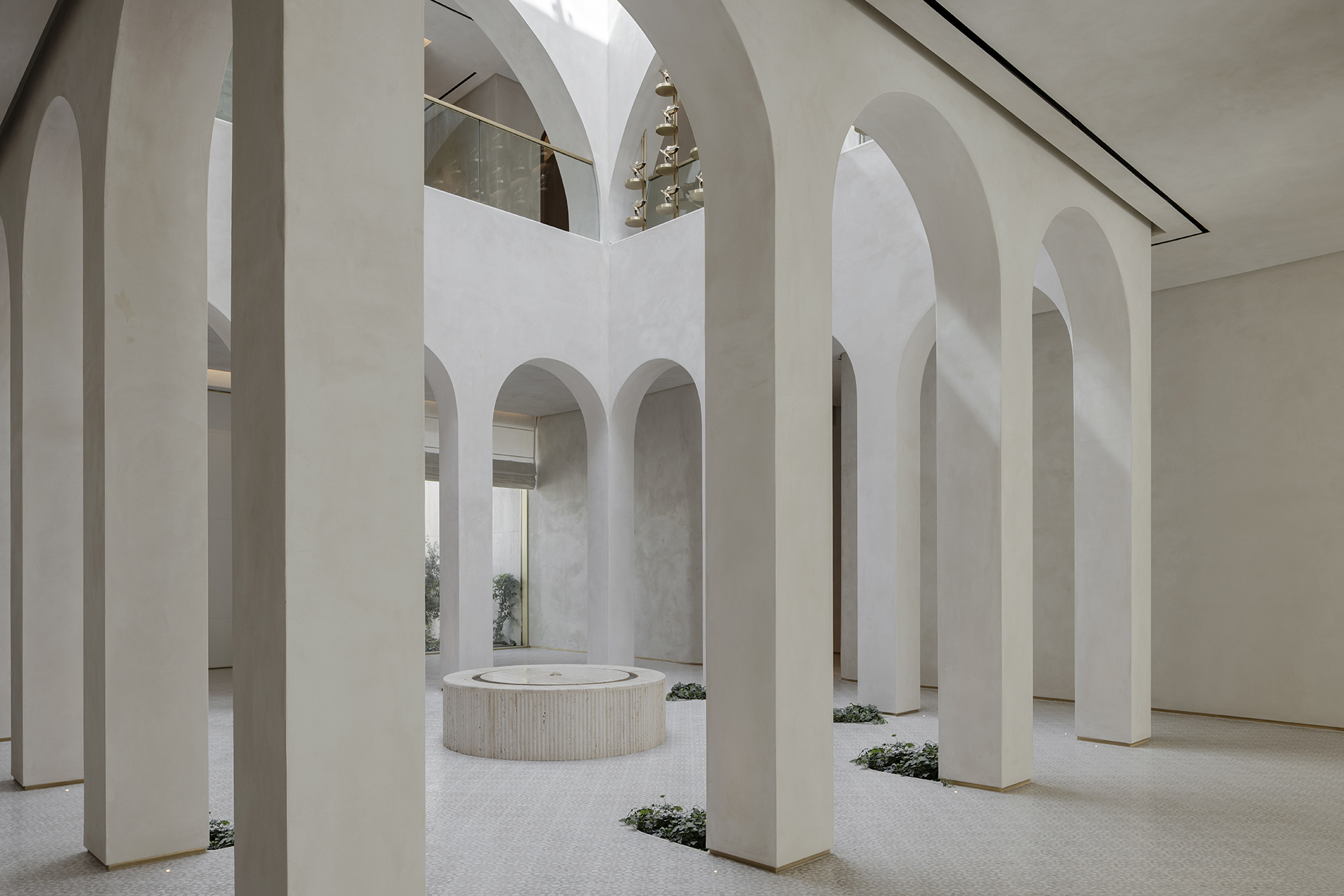
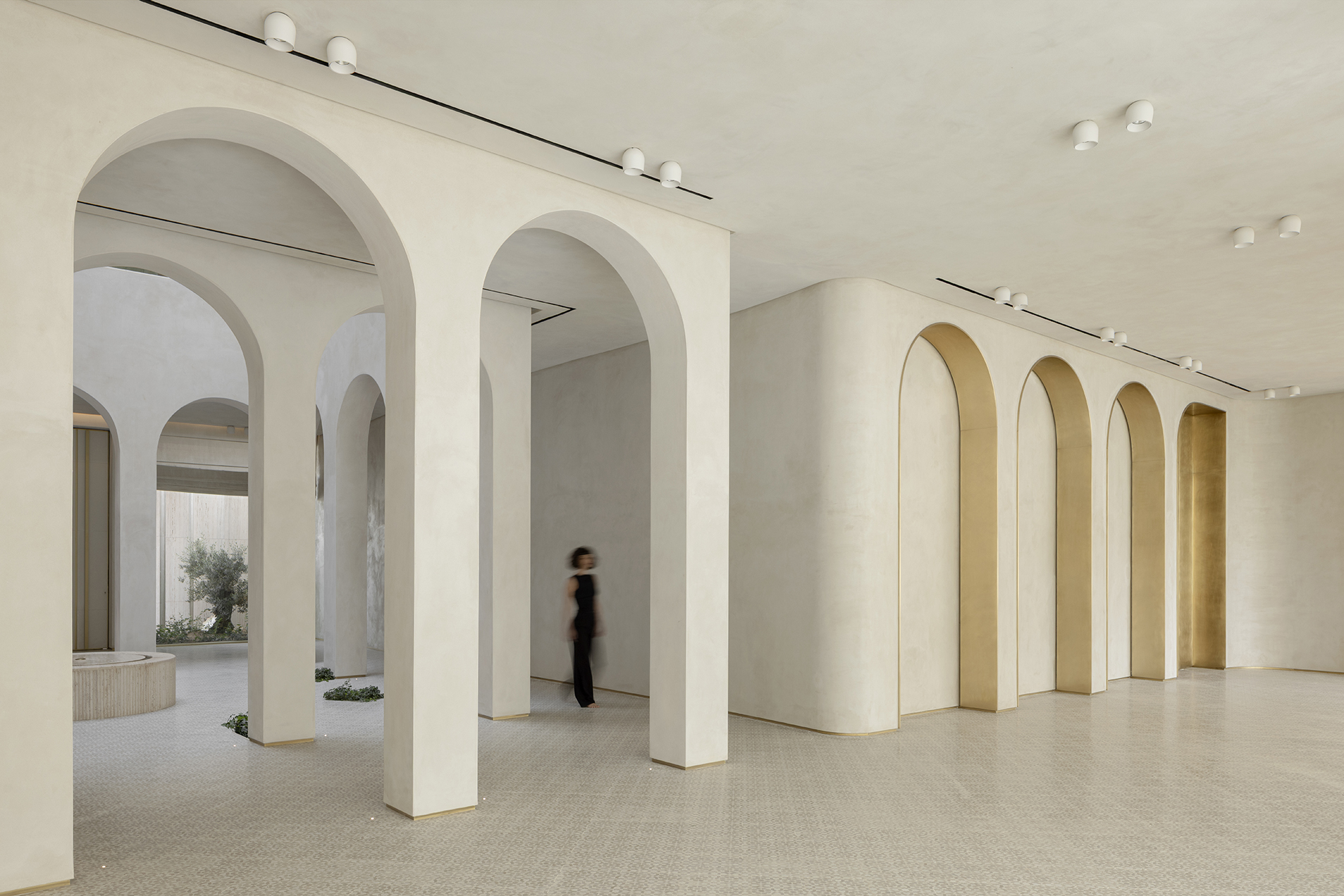
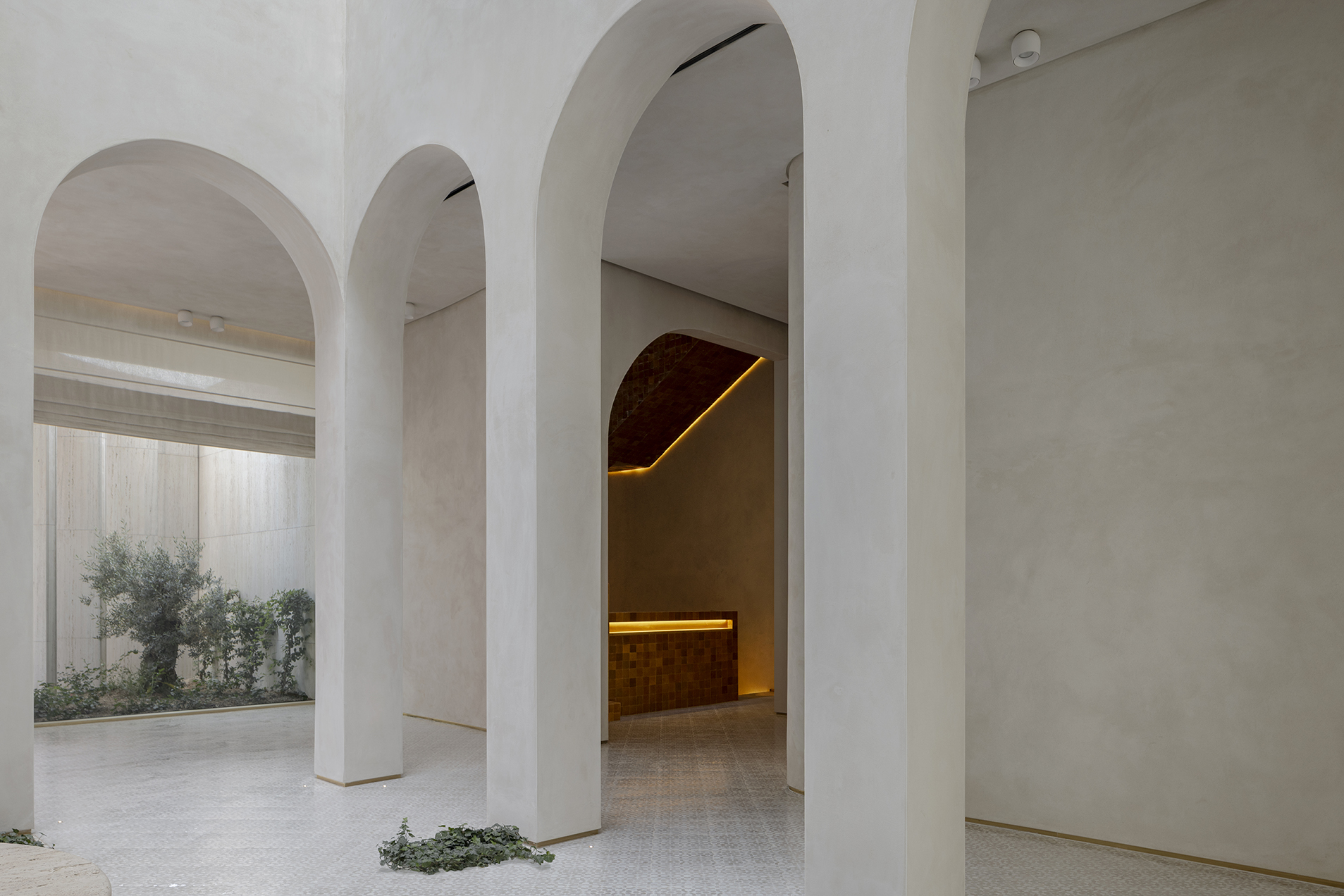
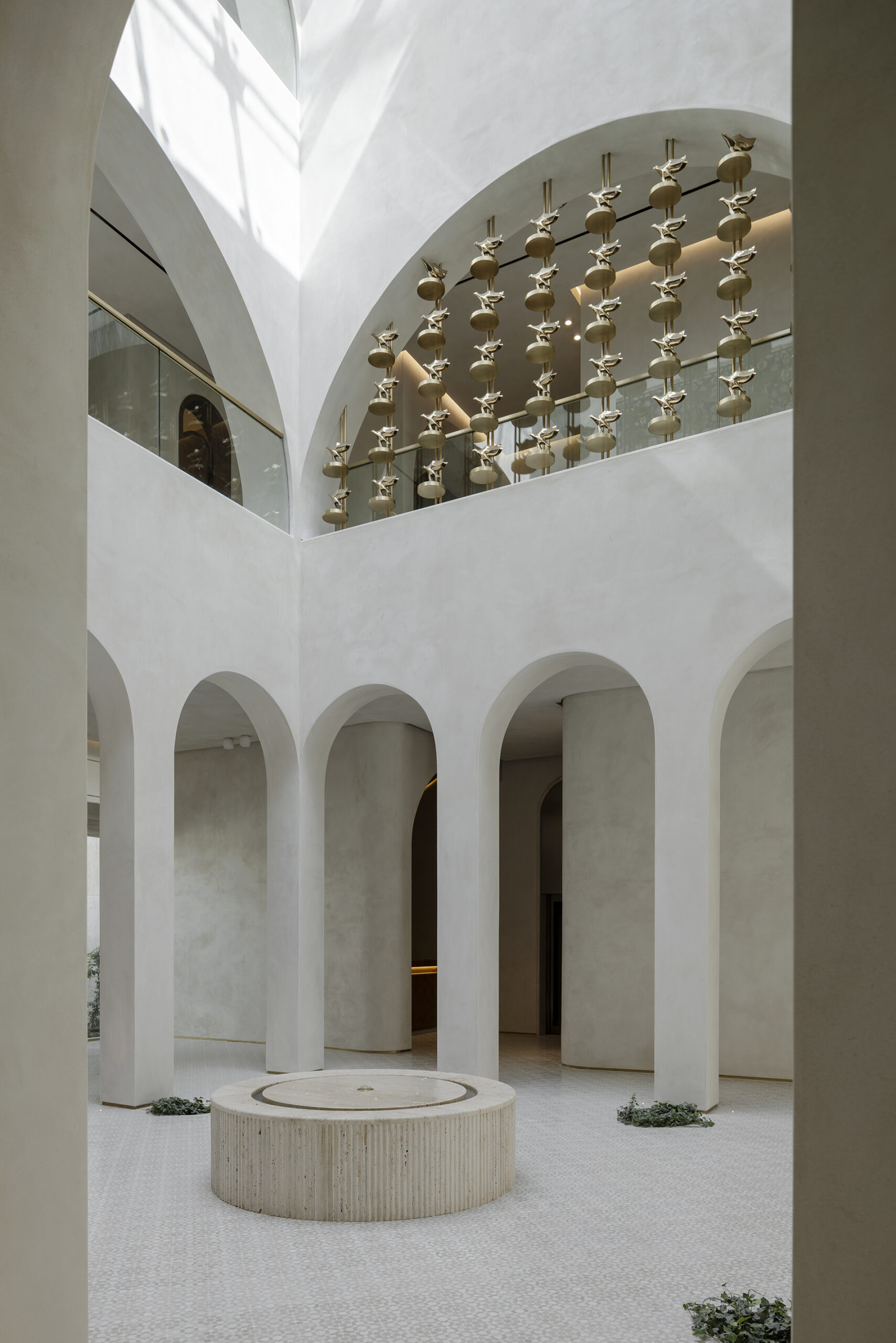
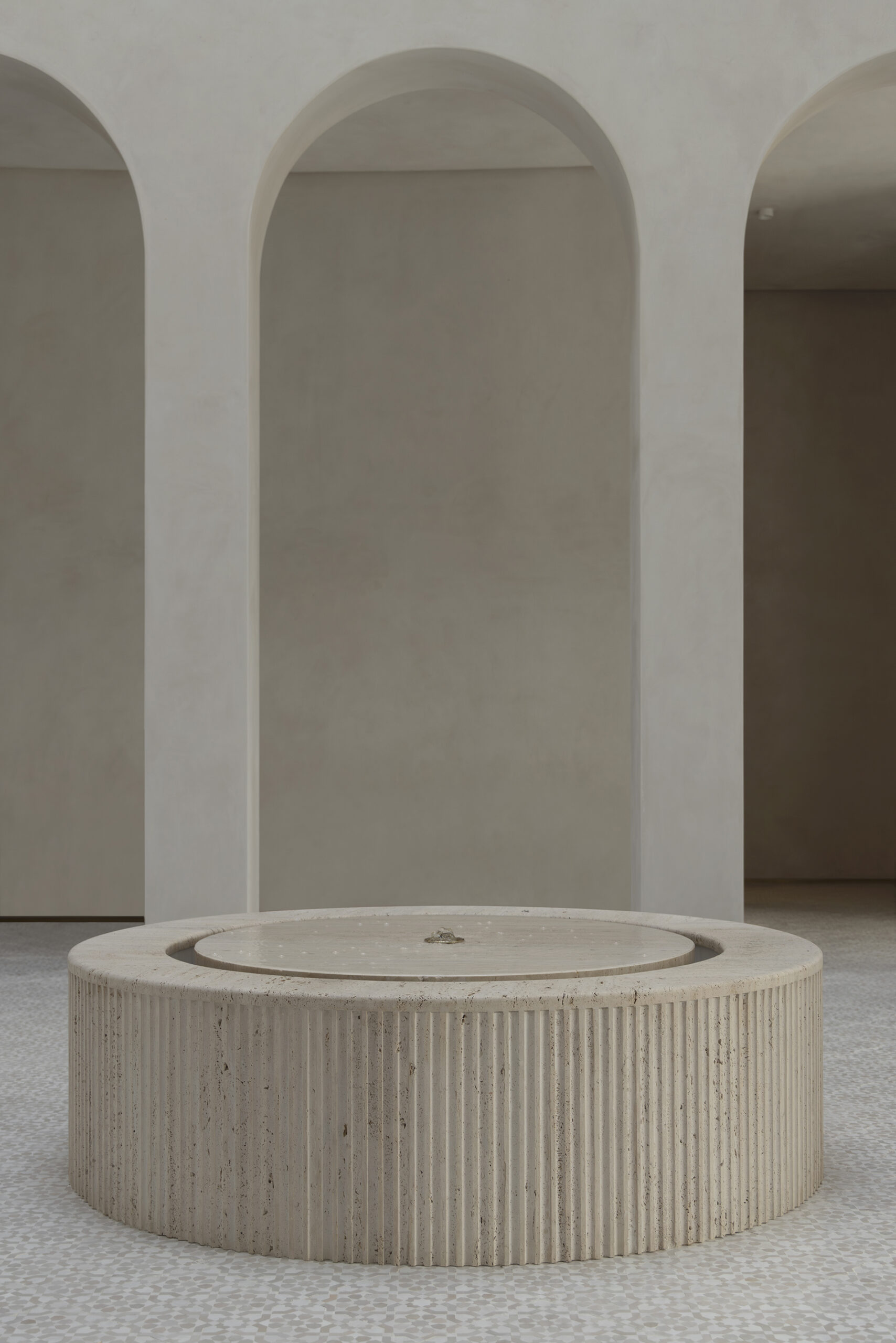
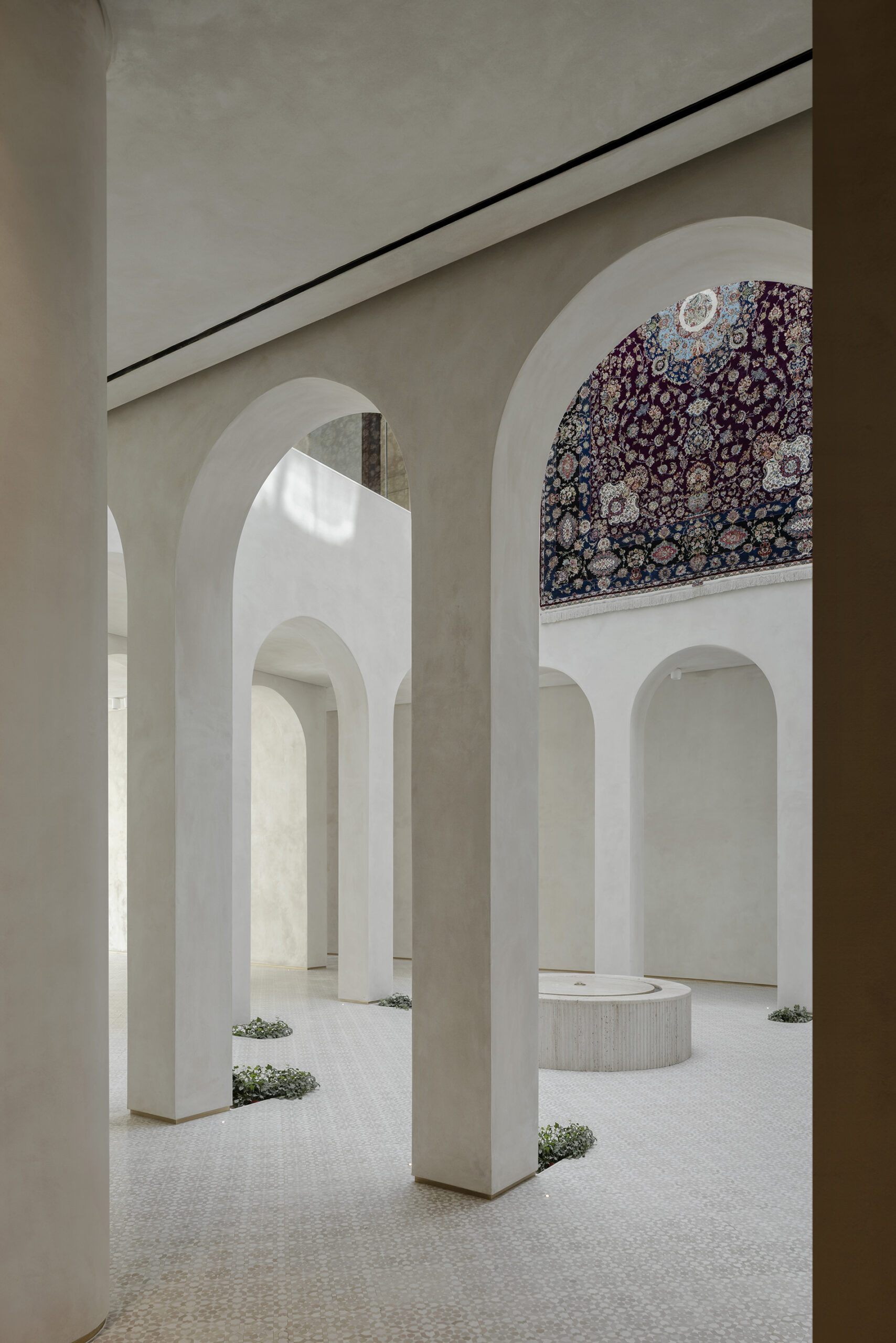
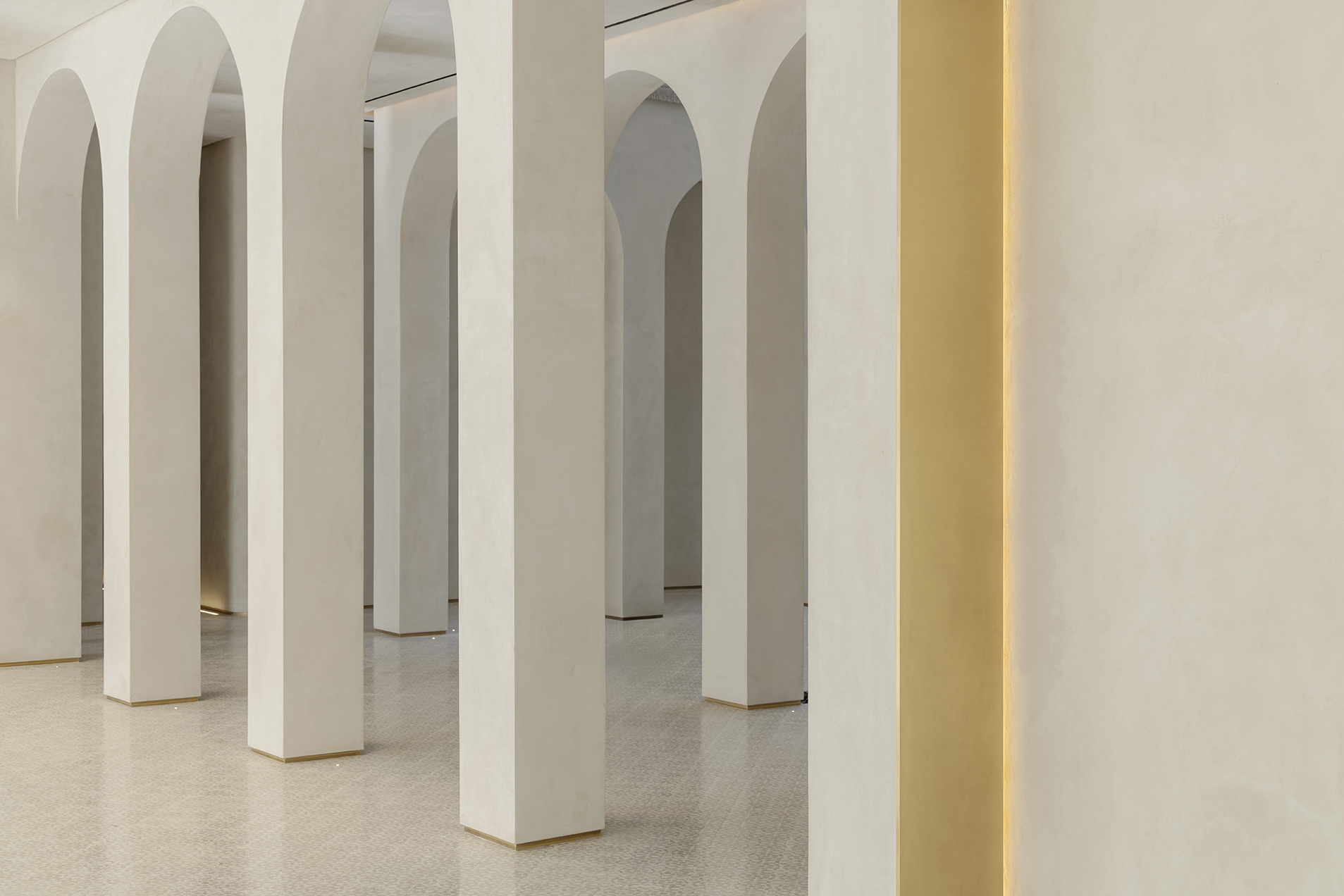
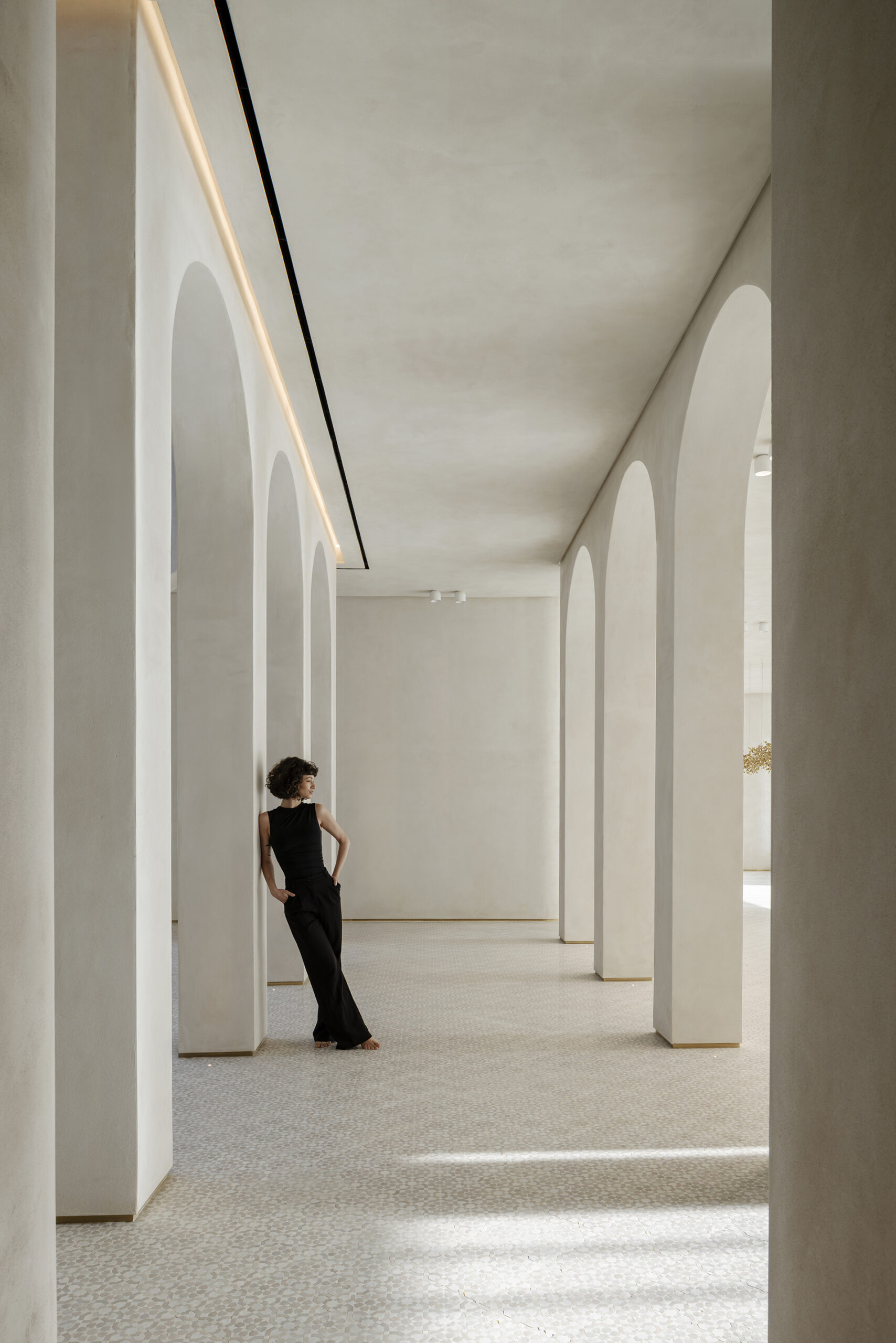
perspectives.
Each view
carefully
framed.
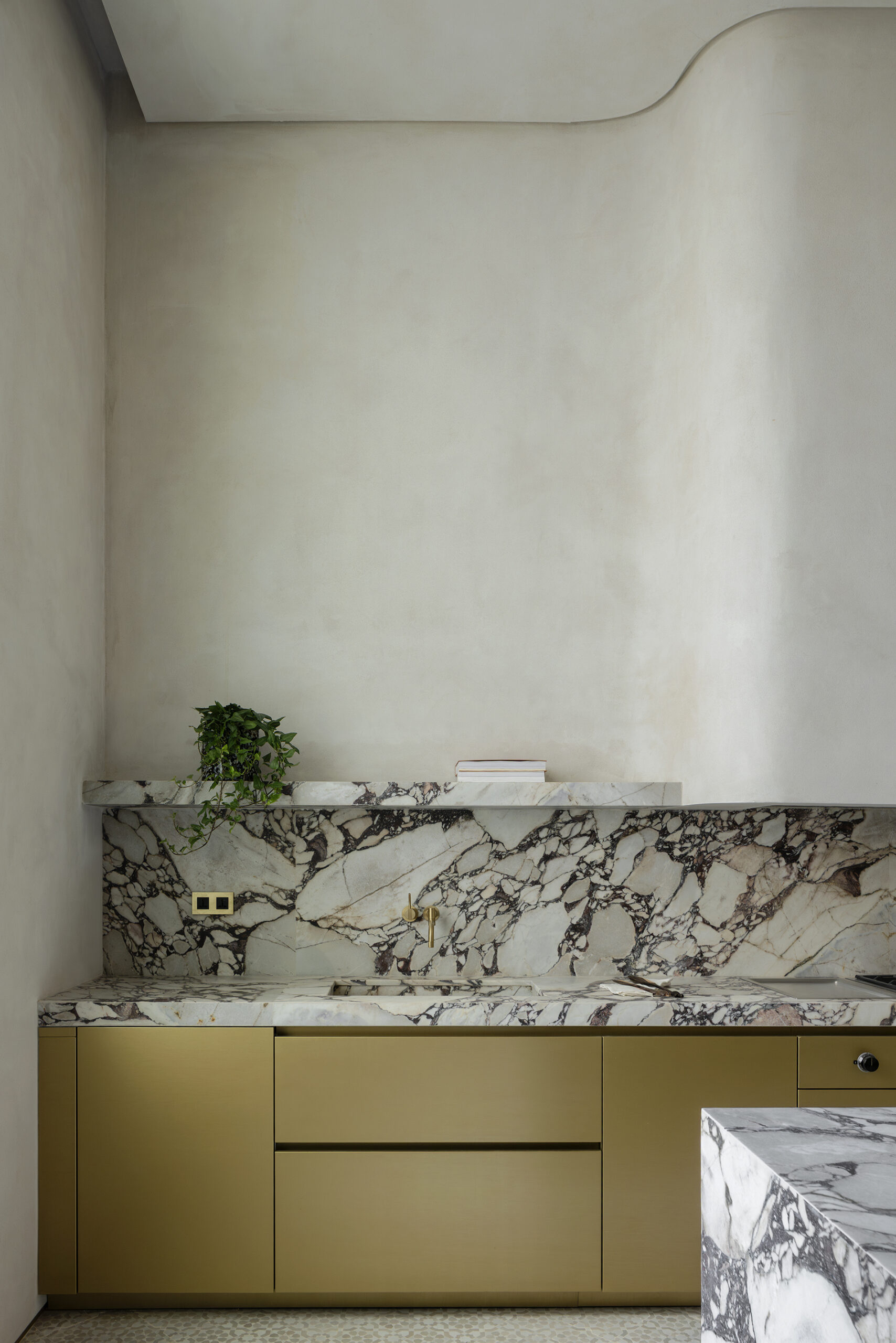
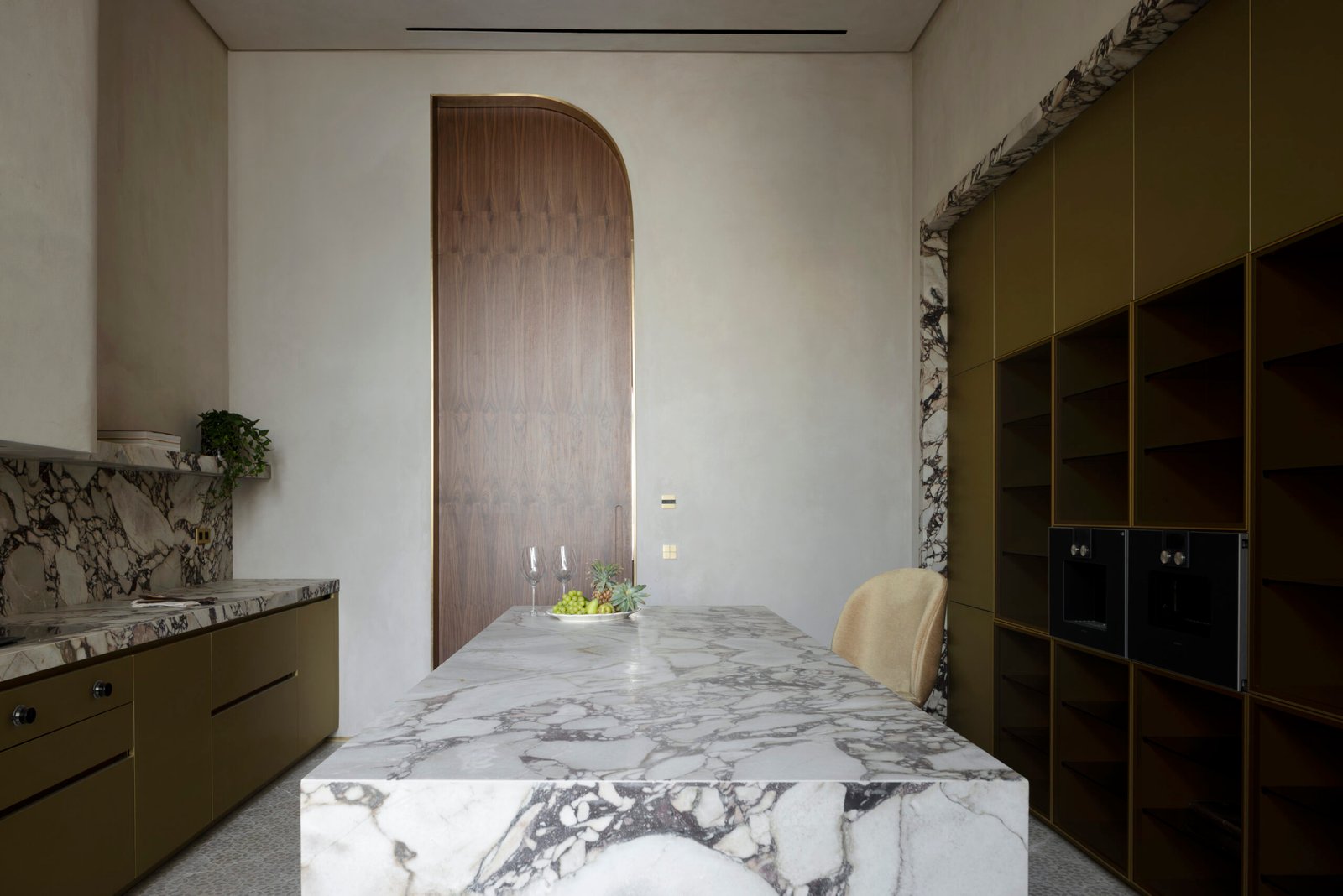
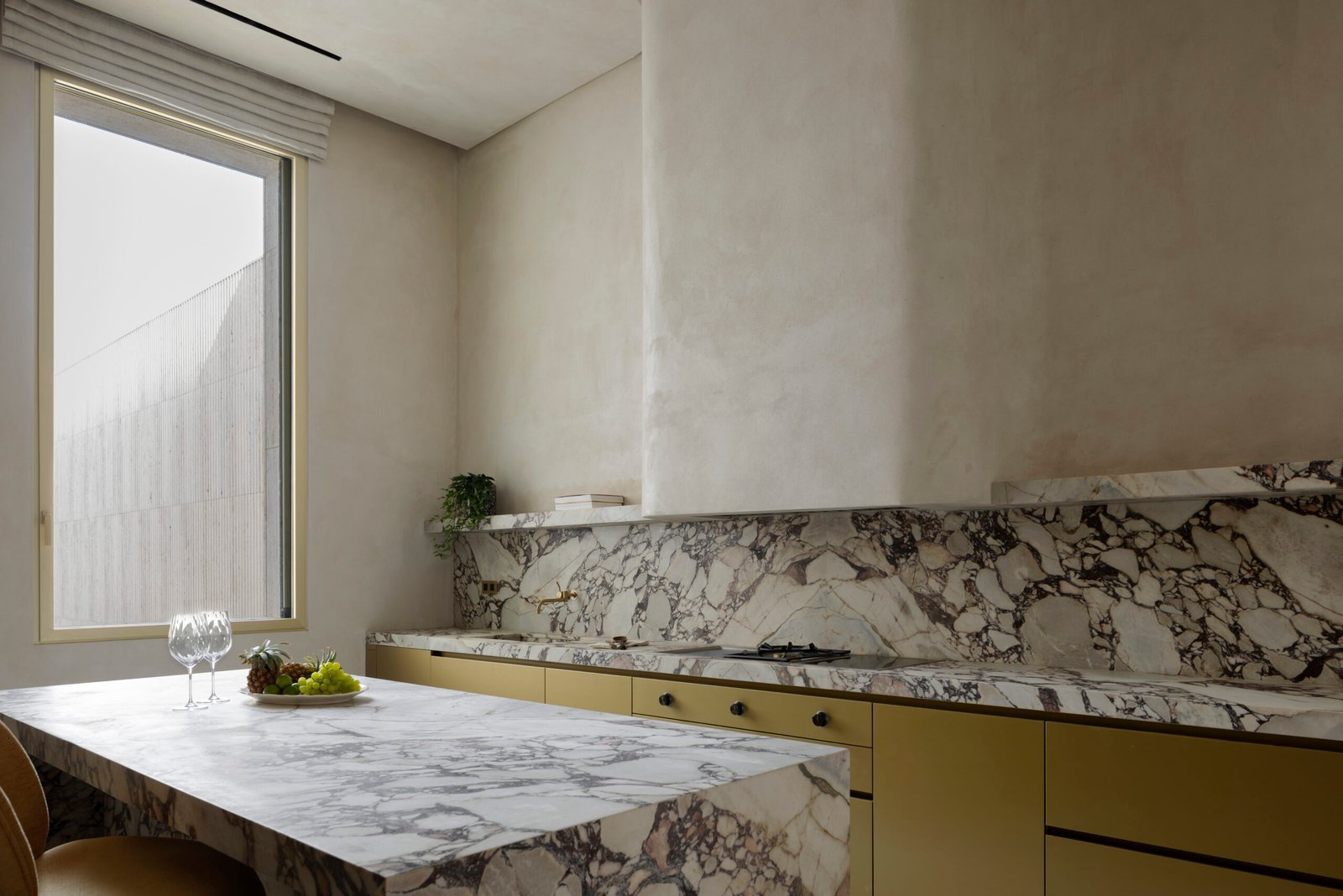
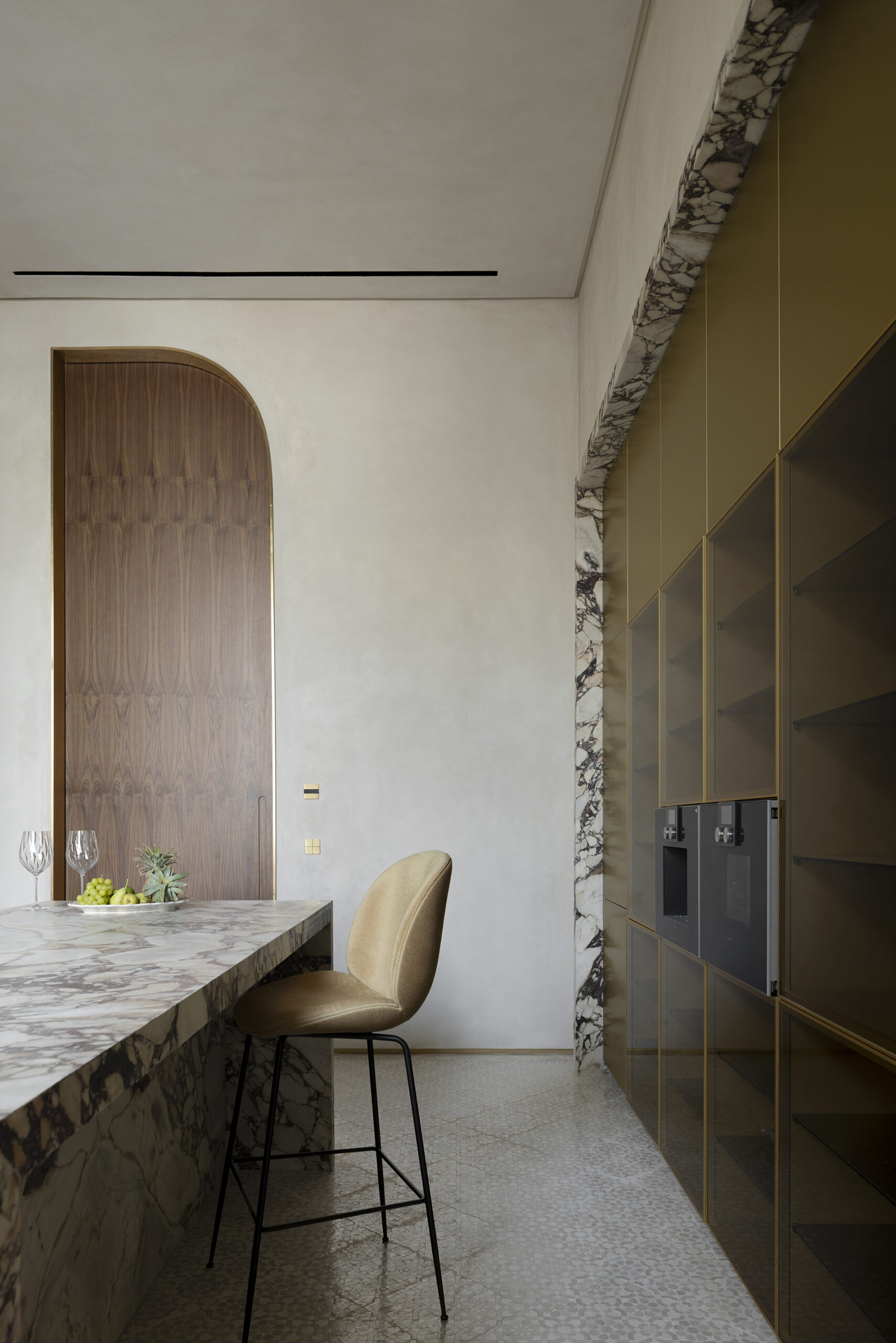
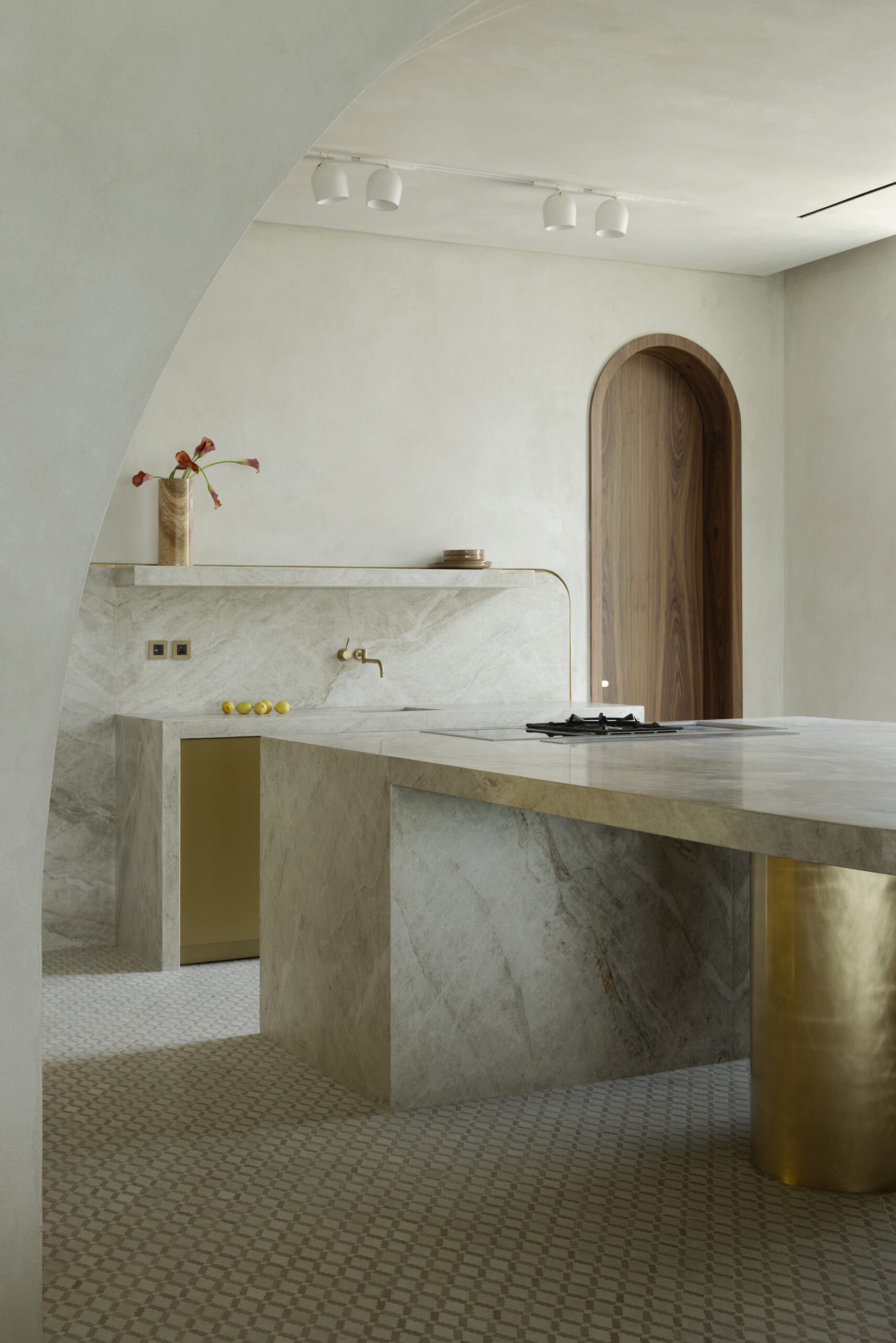
This kitchen is conceived as a social space for guests—an environment for conversation, movement, and informal
encounters. Designed for preparing coffee or sharing a small aperitif, it expands the experience of gathering beyond the
dining table or traditional seating, allowing interaction to unfold naturally around work, gesture, and proximity.
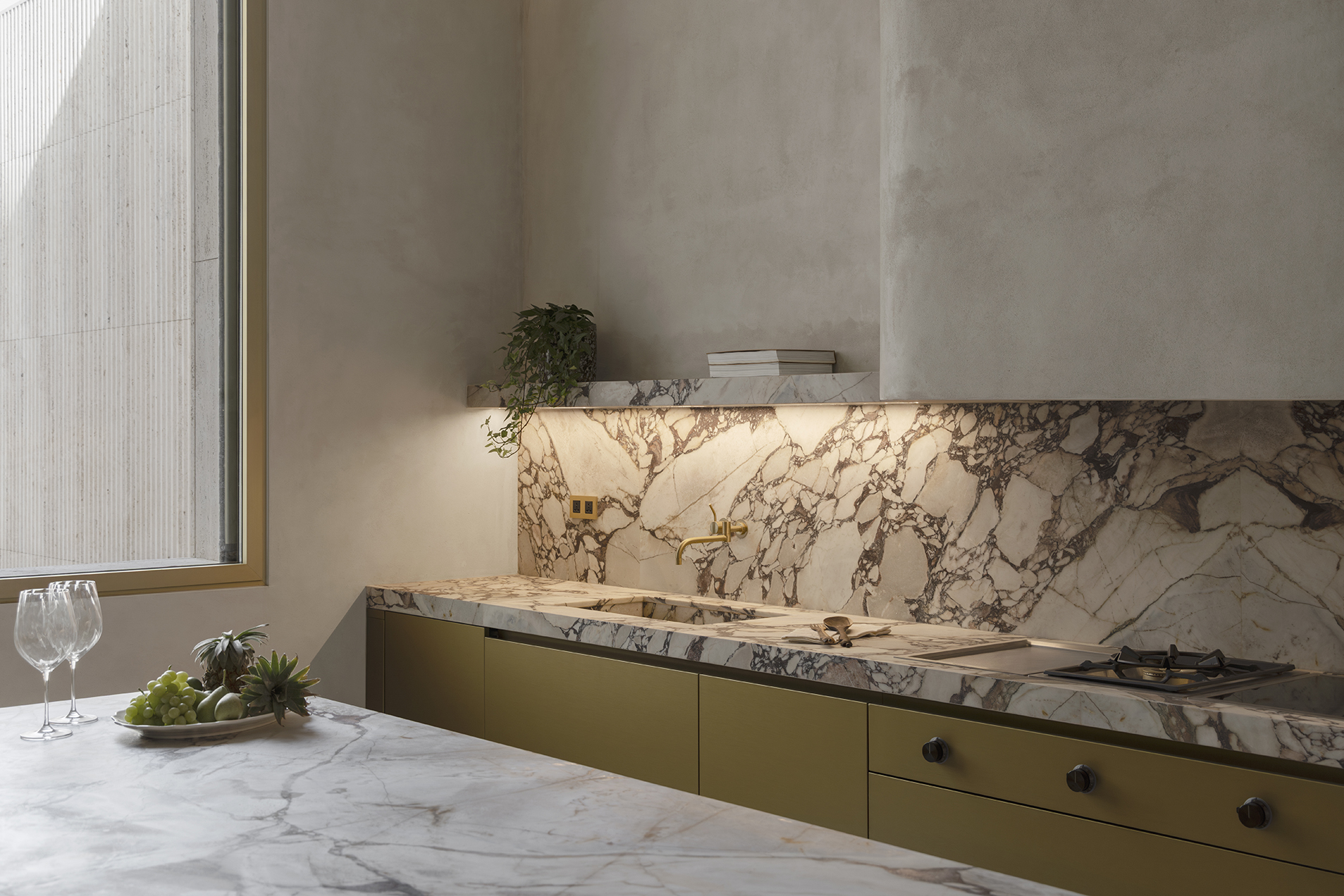
The movement of the curved walls is distilled into smaller architectural gestures. In the kitchen, this continuity
materializes in a sculpted extraction canopy—conceived as an inhabitable threshold rather than a technical element.
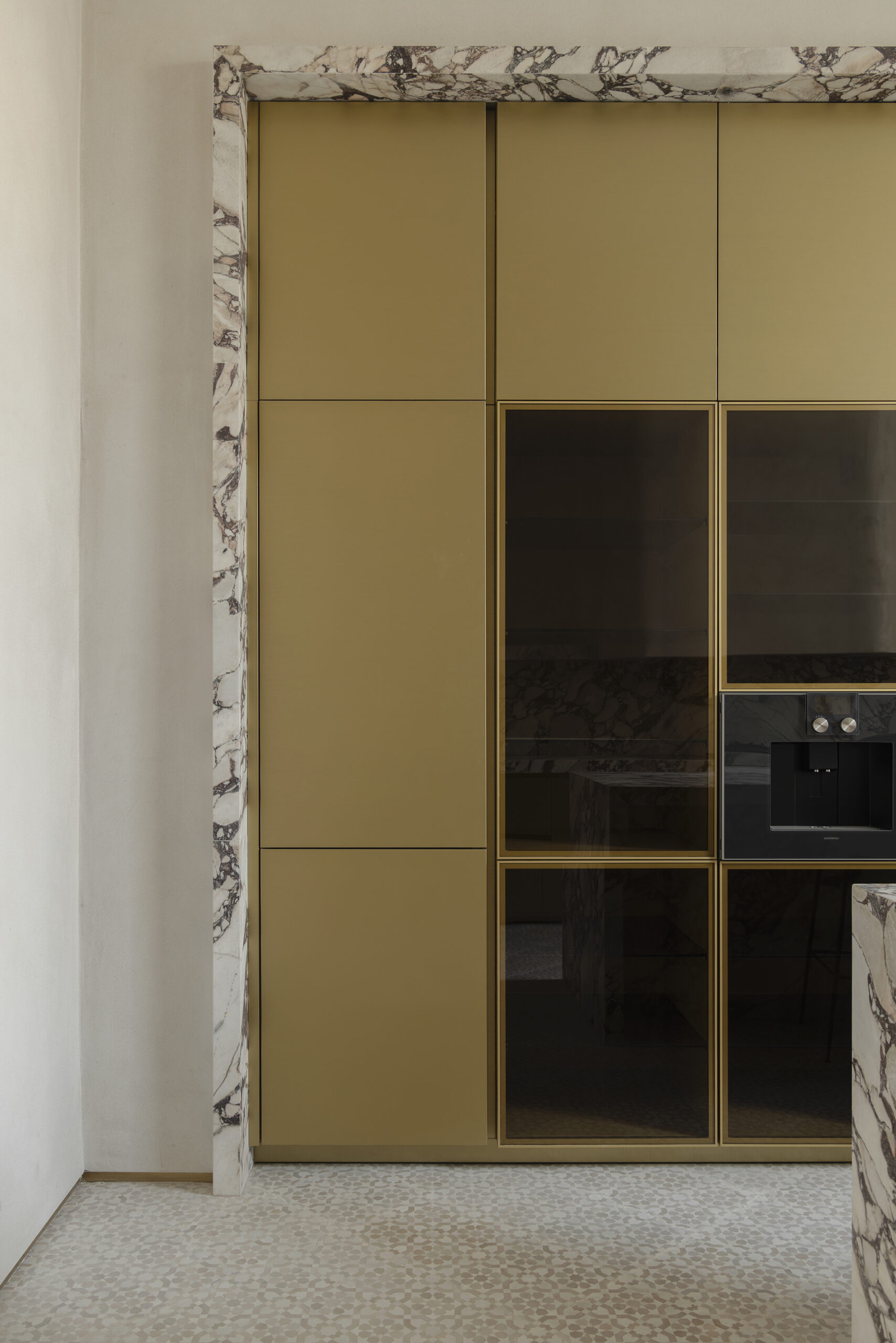
Veined marble surfaces splash against the broken white clay walls, their weight and pattern deliberately framing the
workspace and intensifying the tactile contrast between mass and softness.

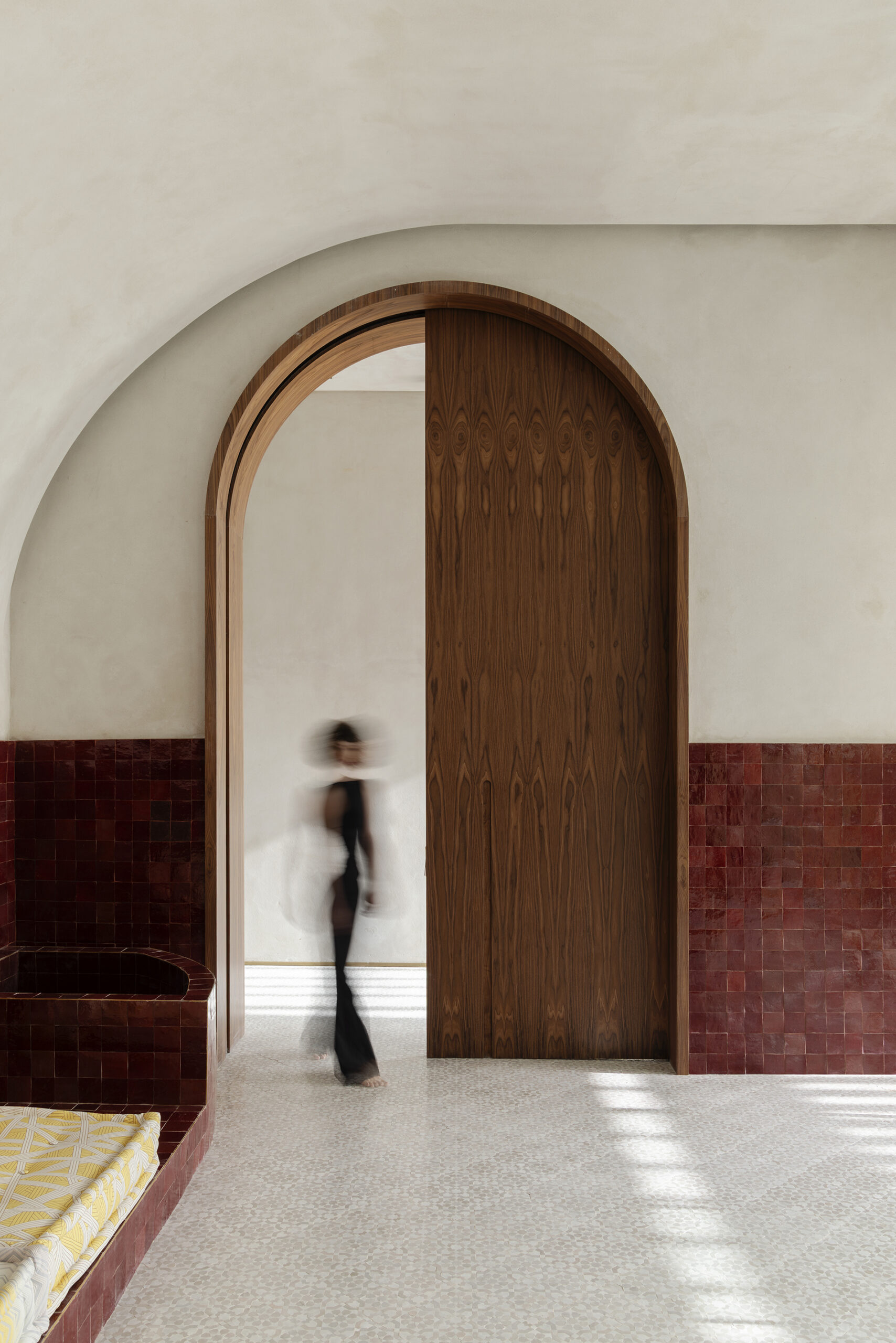
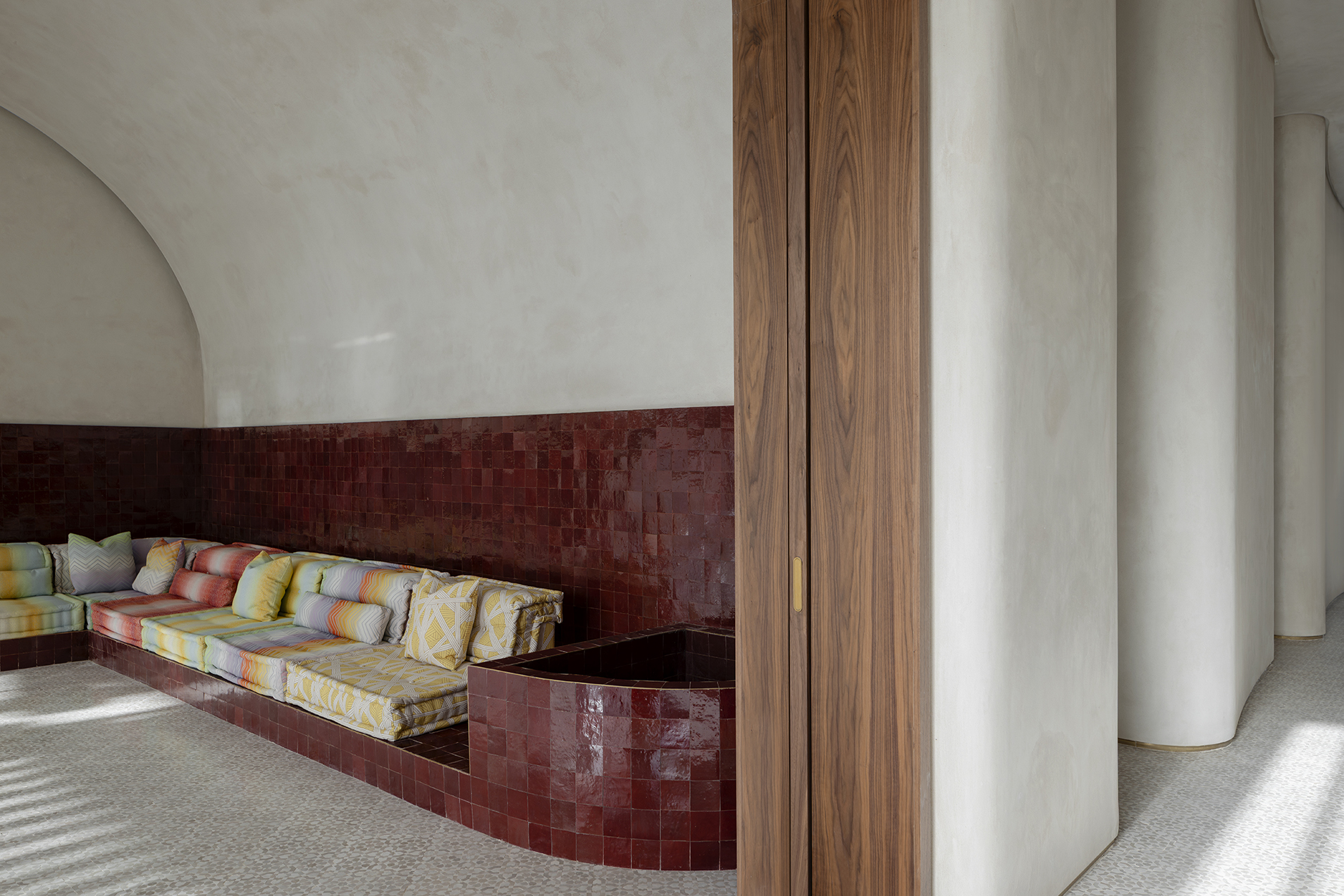
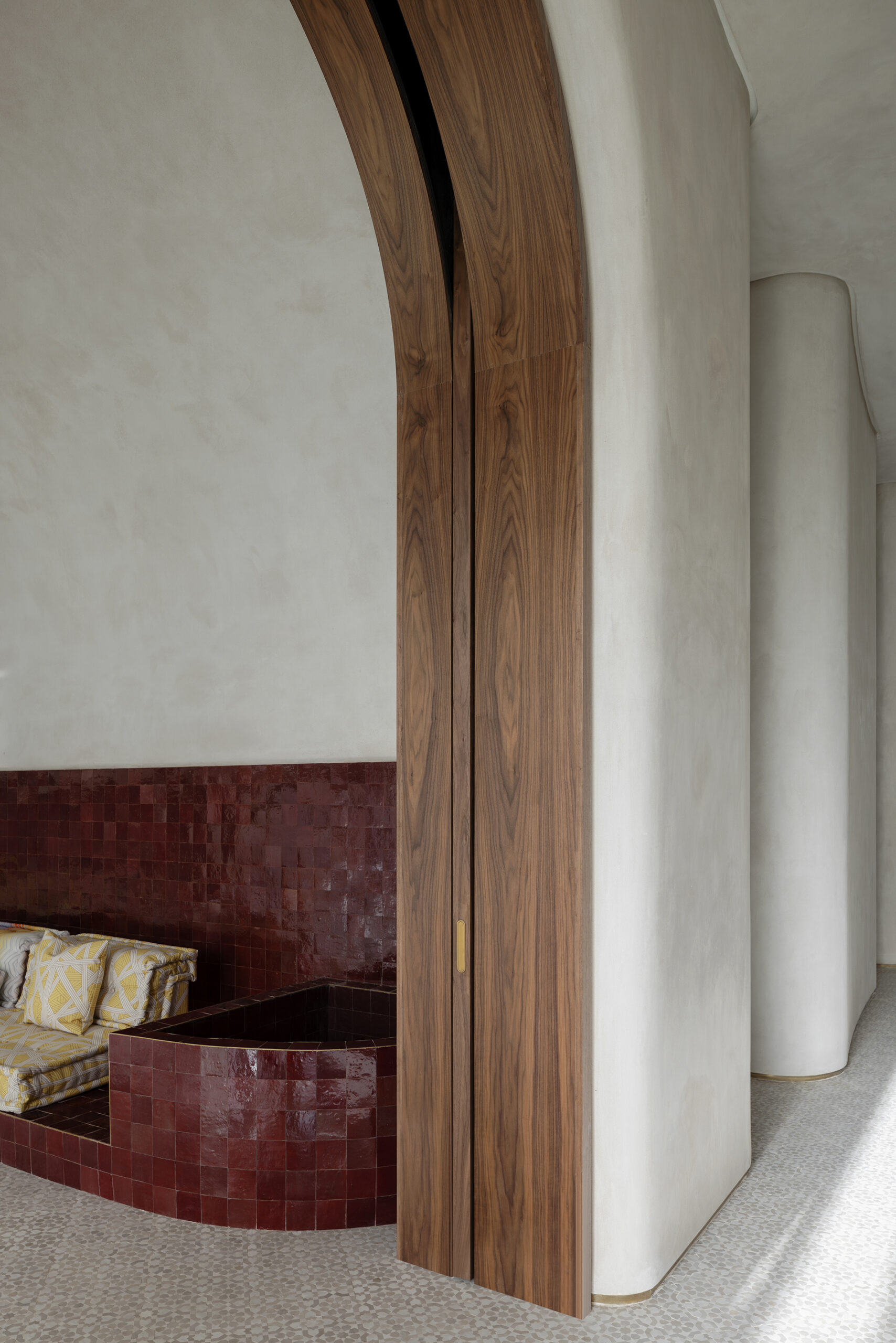
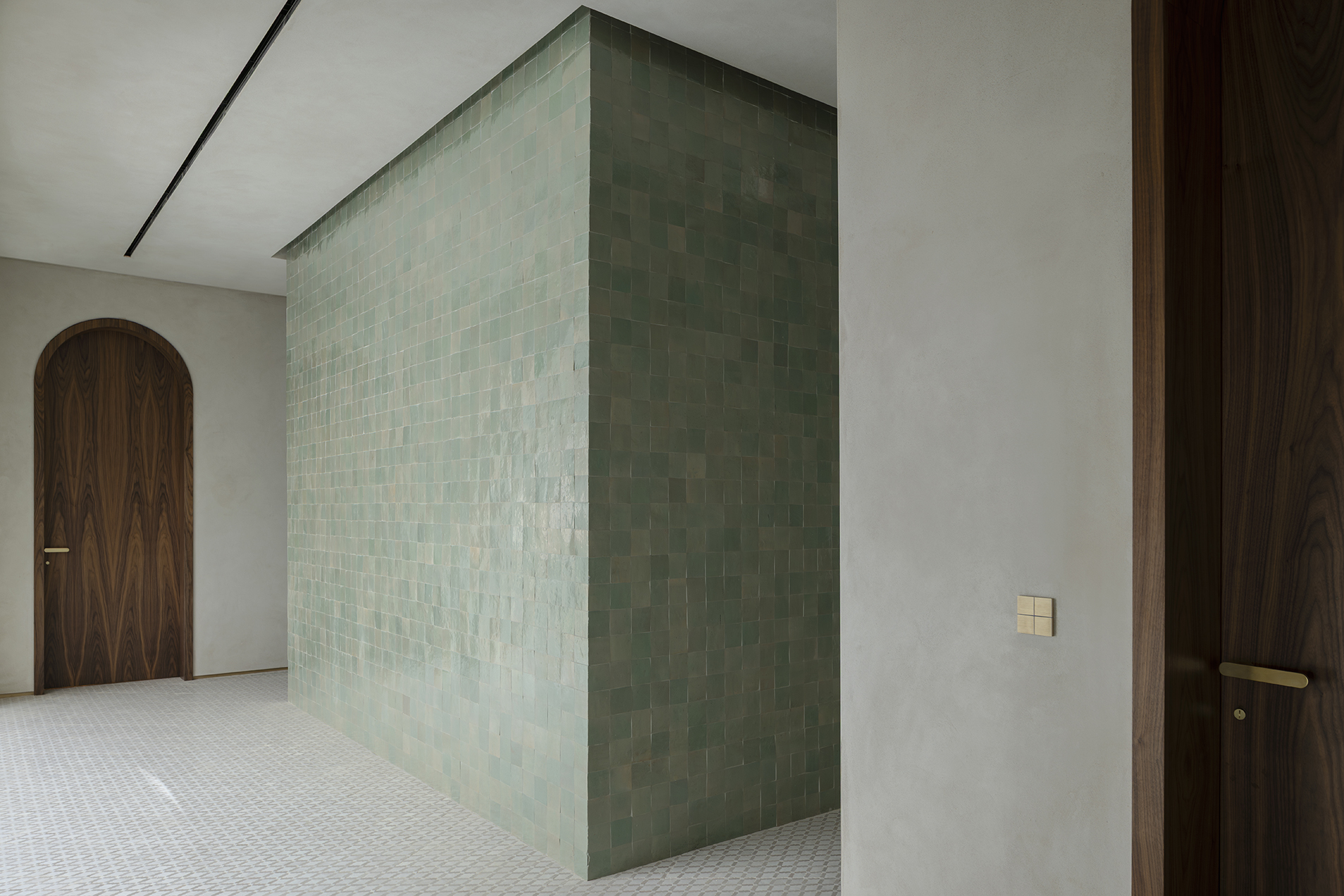
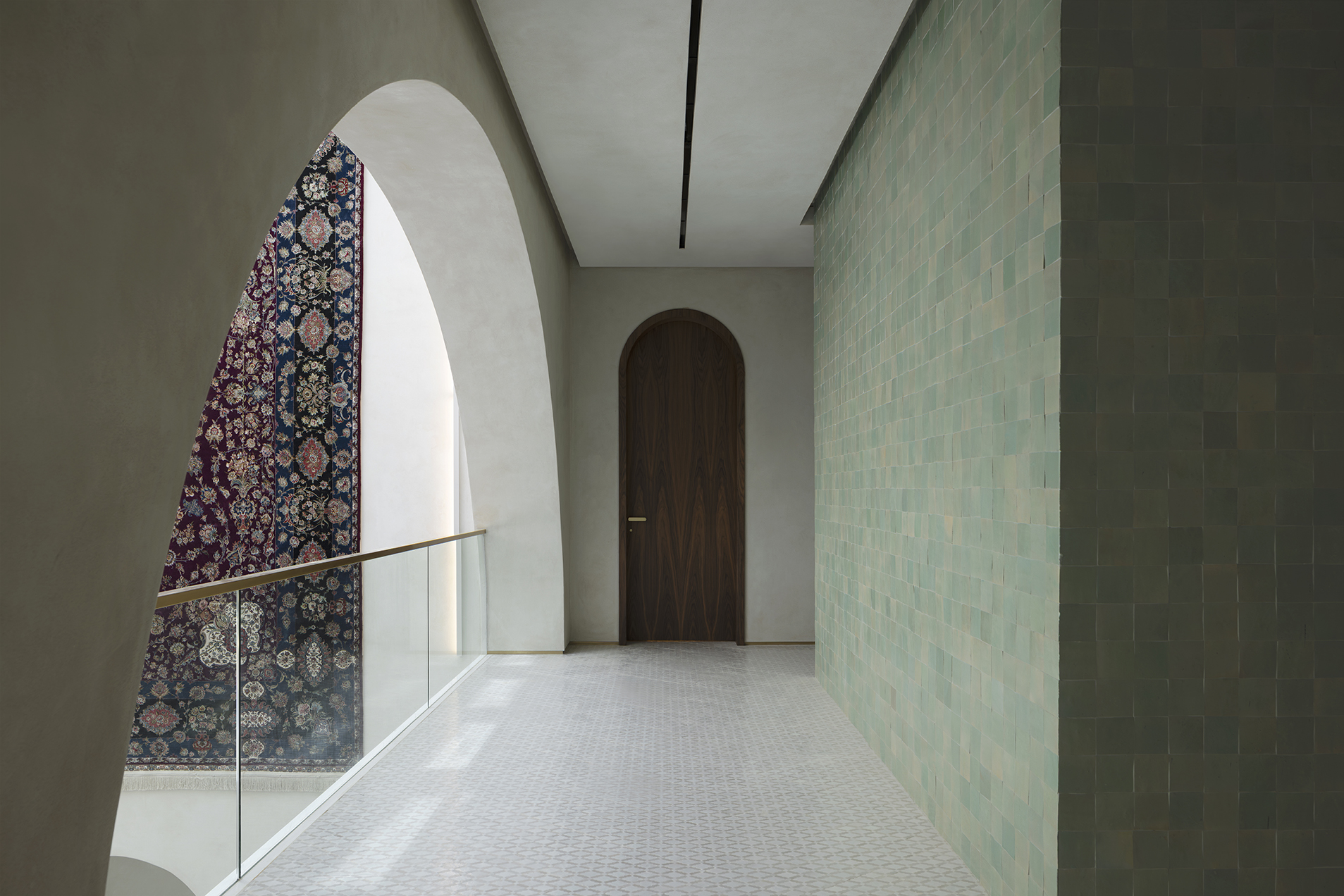
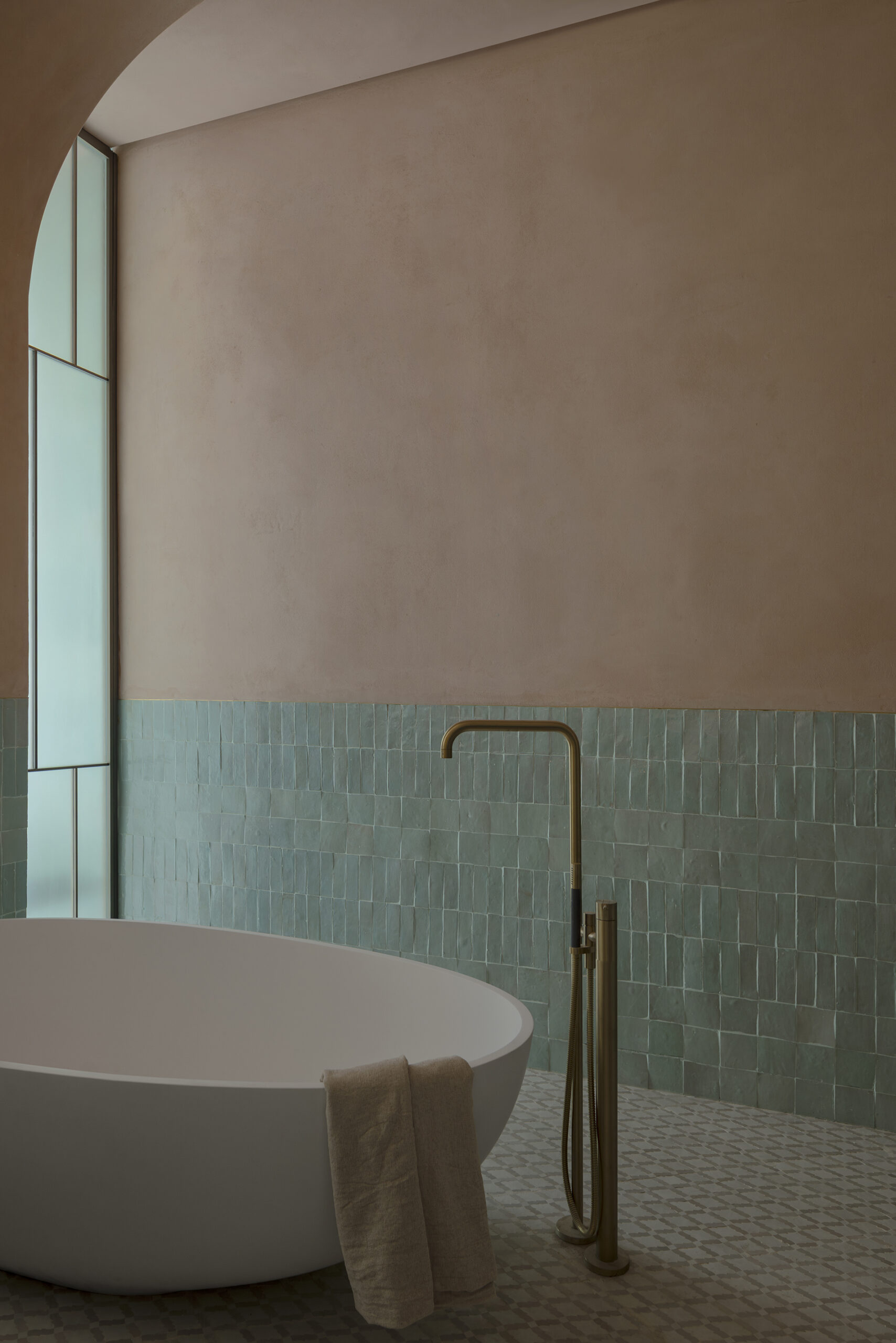
The upper floor acts as a zone of convergence, where different areas, colors, and artworks intersect through carefully calibrated transitions. Circulation unfolds as a sequence of framed views, allowing spatial layers and chromatic contrasts to coexist without overlap. Within the mint-colored volume, a meditation room is conceived as an introspective space—quiet, enclosed, and intentionally devoid of natural light. Opposite, a contrasting volume houses a vitality pool, conceived as a sensorial counterpart. In both cubes, the exterior color continues inward, creating a bubbling effect where material, light, and atmosphere dissolve the boundary between inside and out.
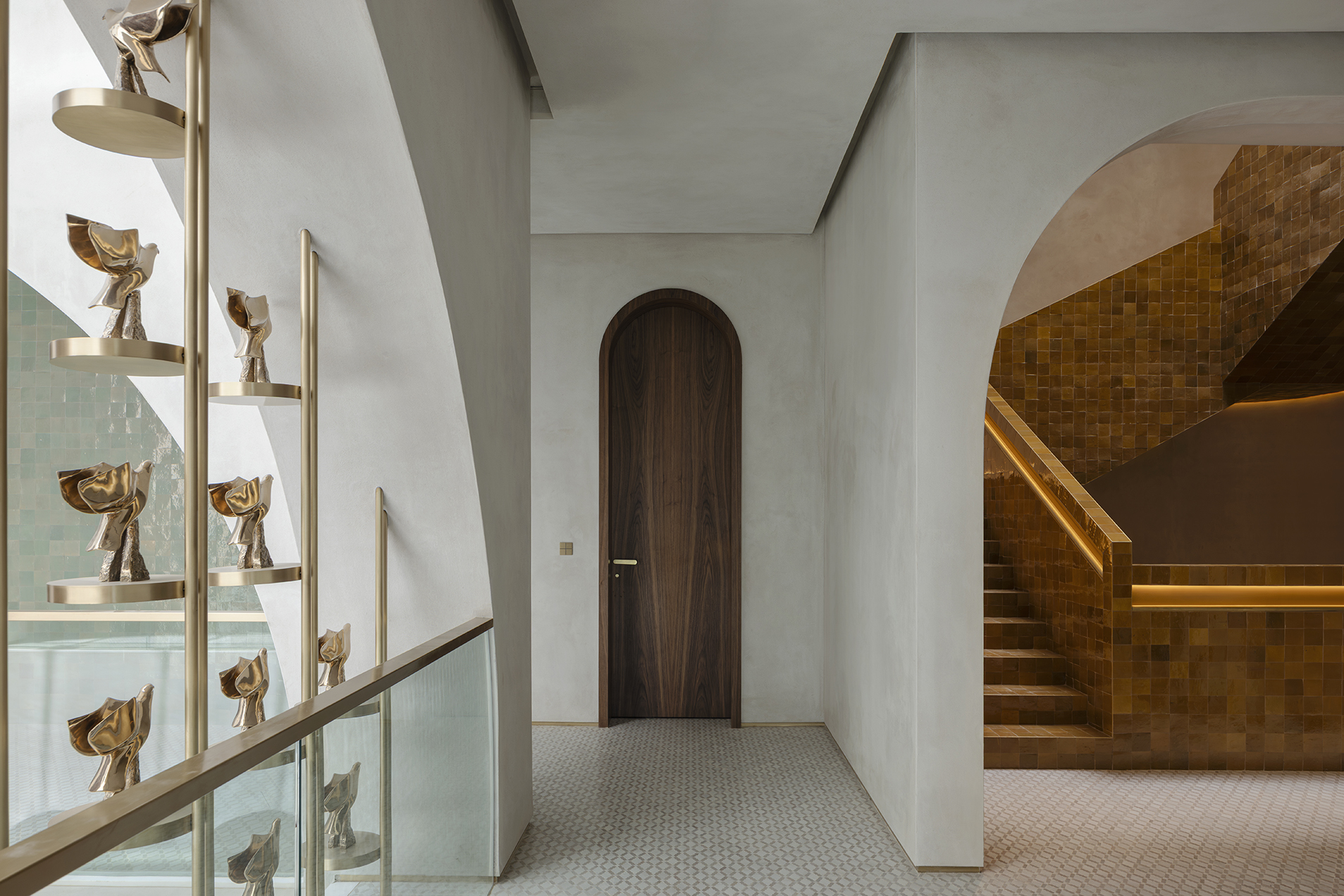
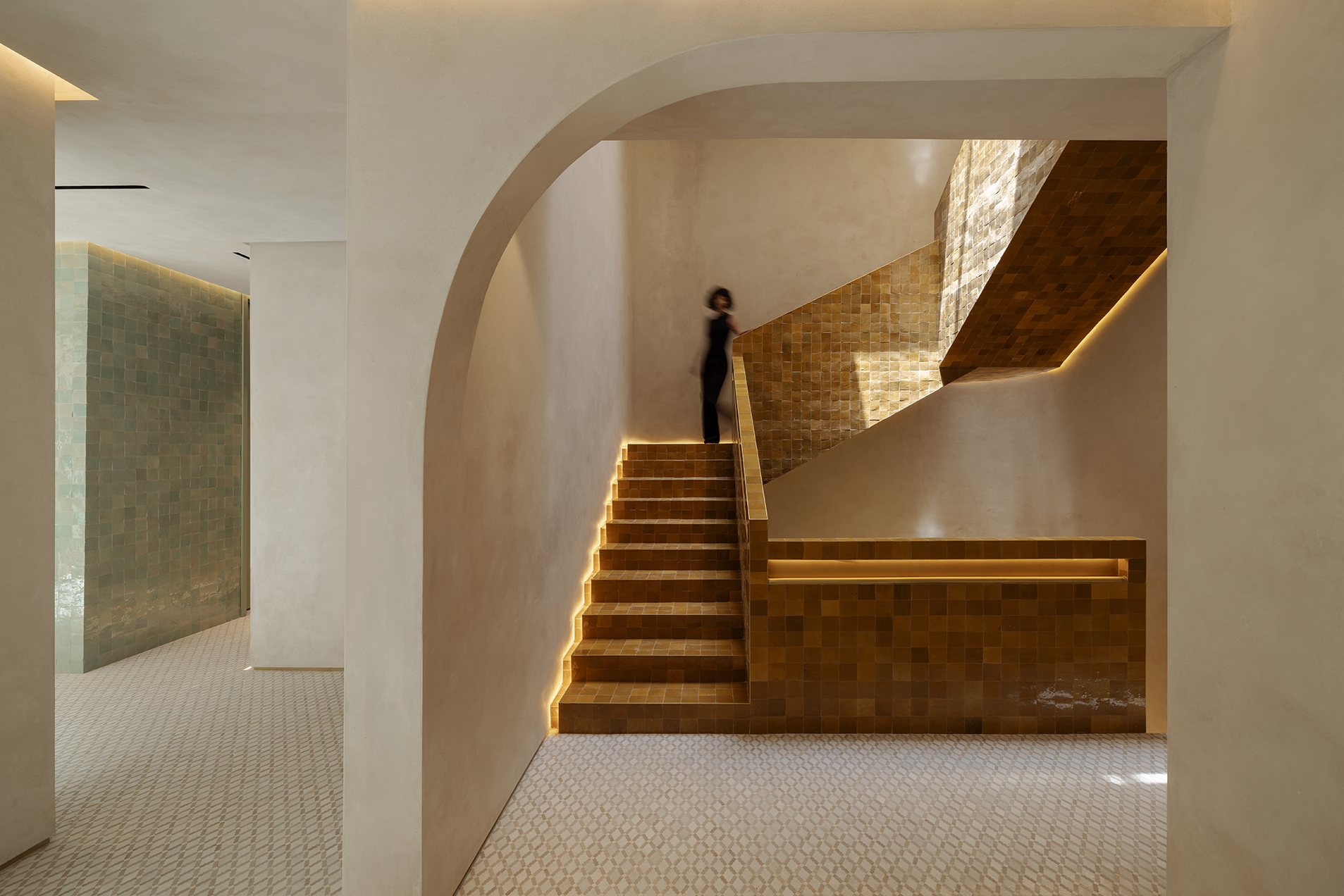
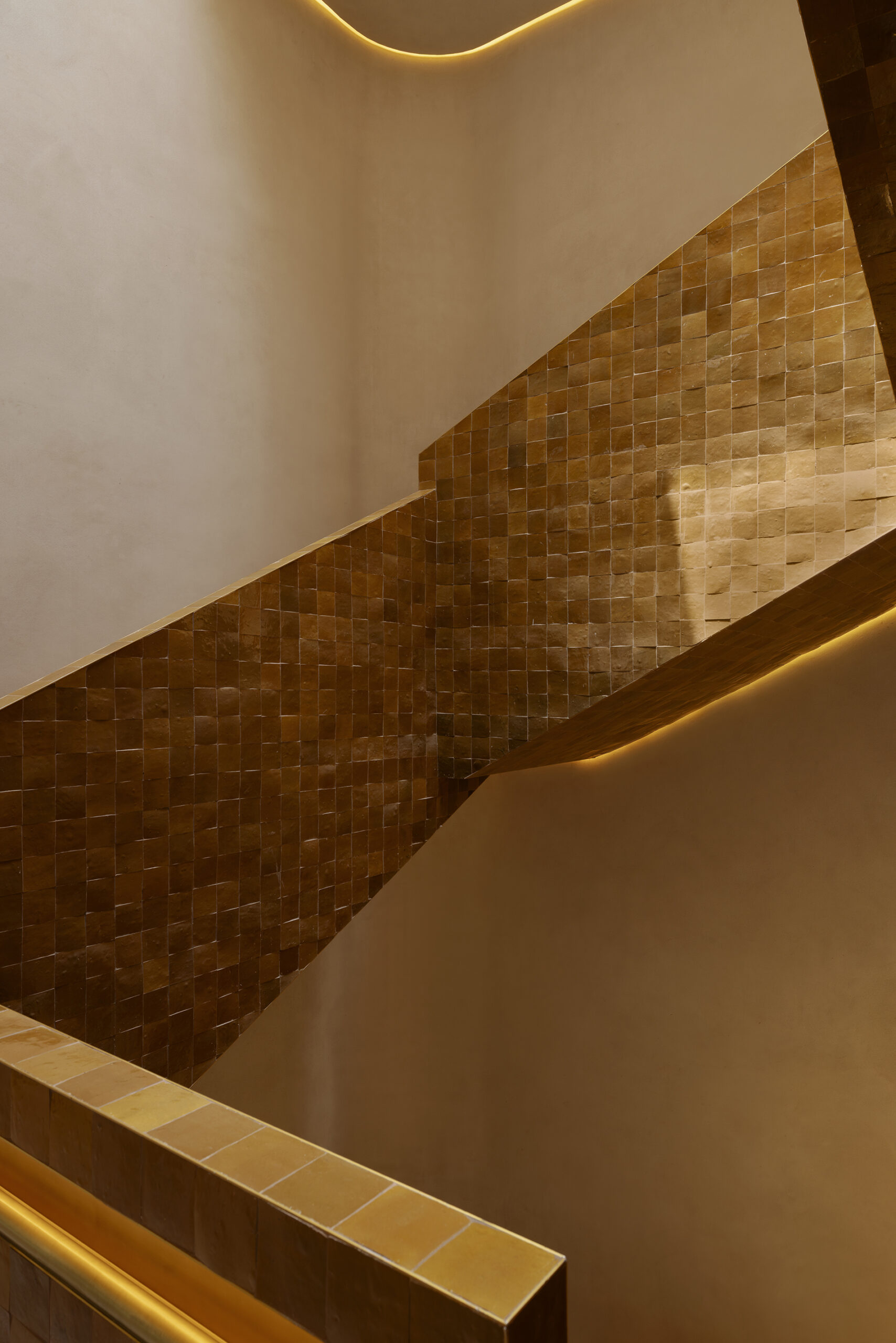
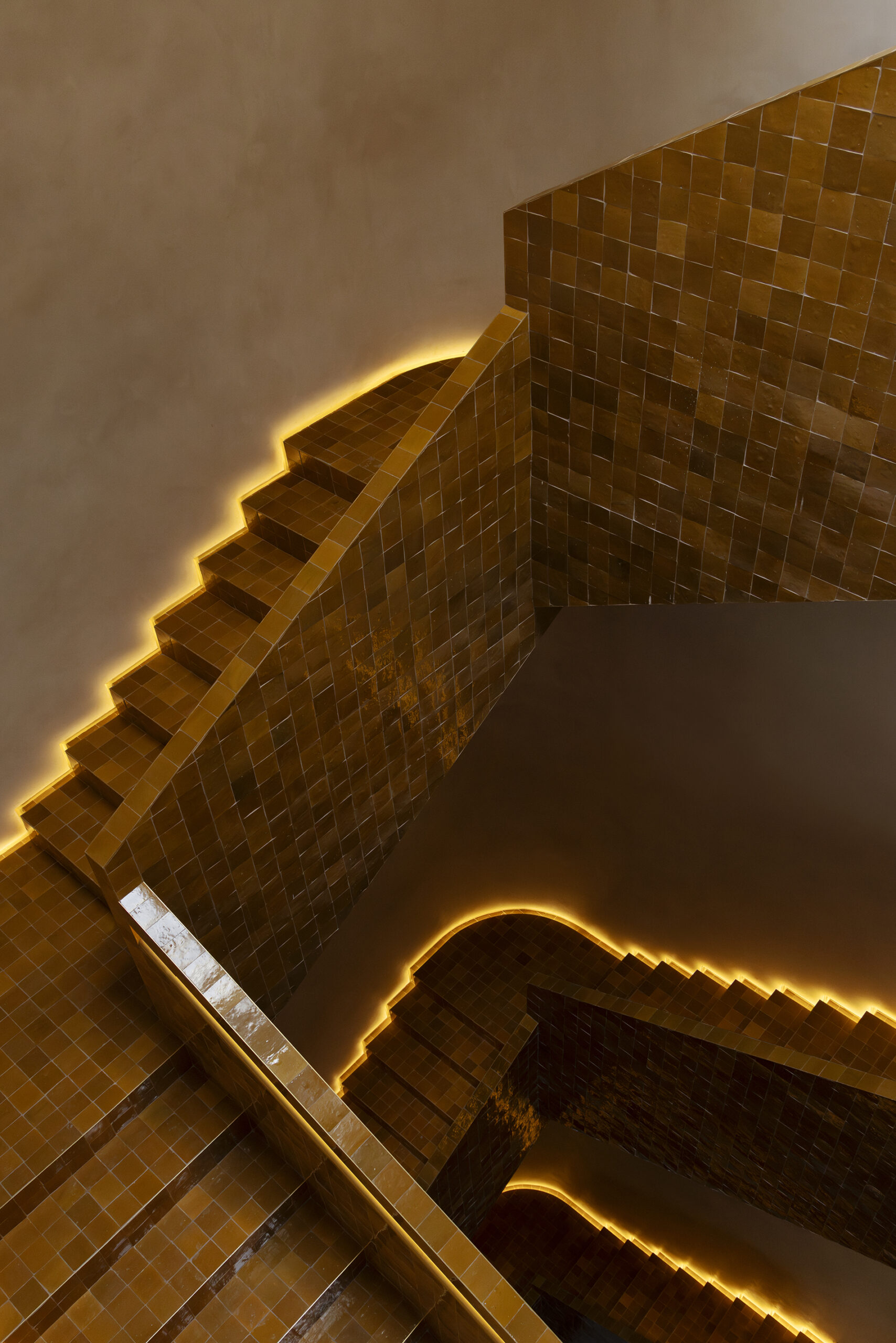
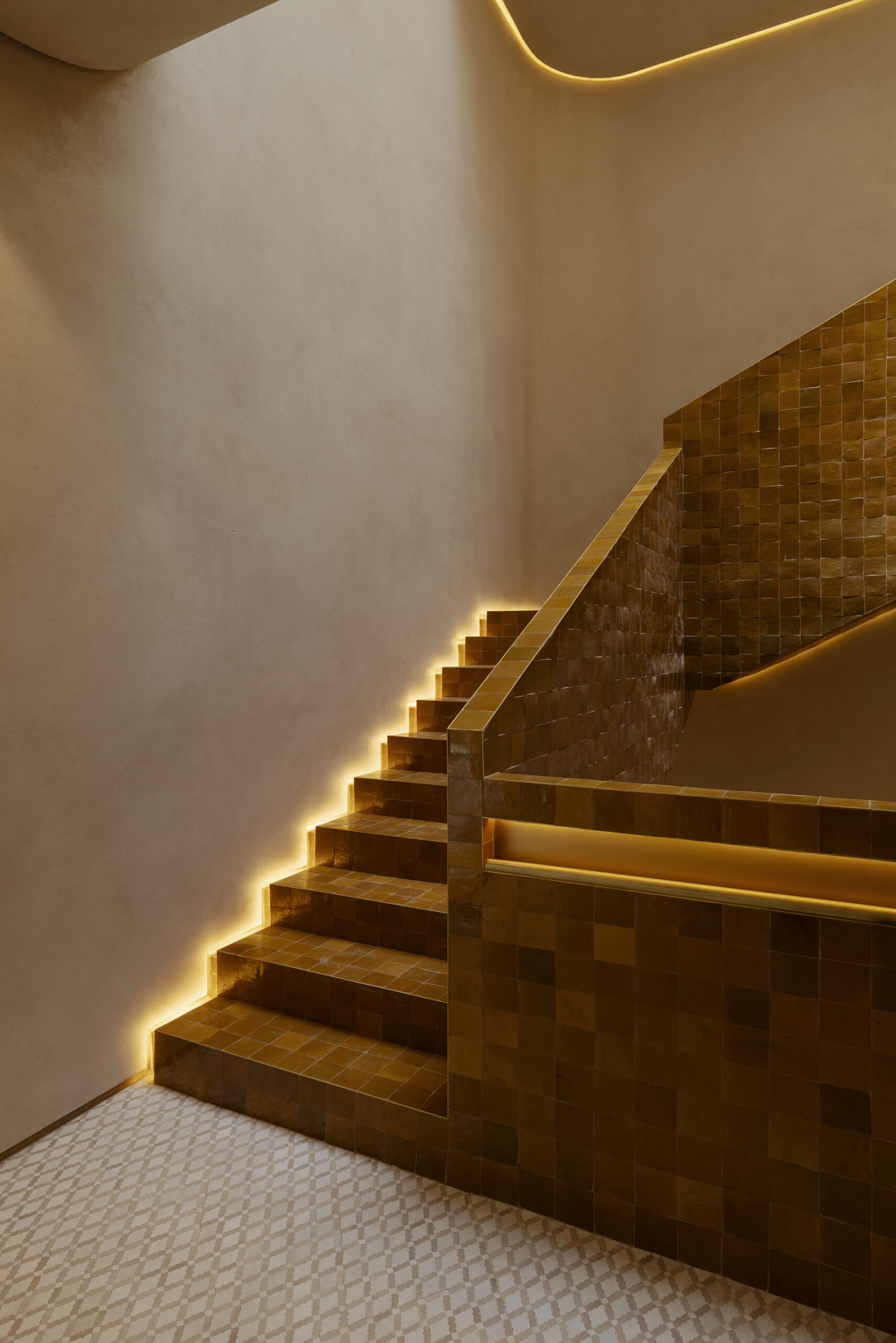
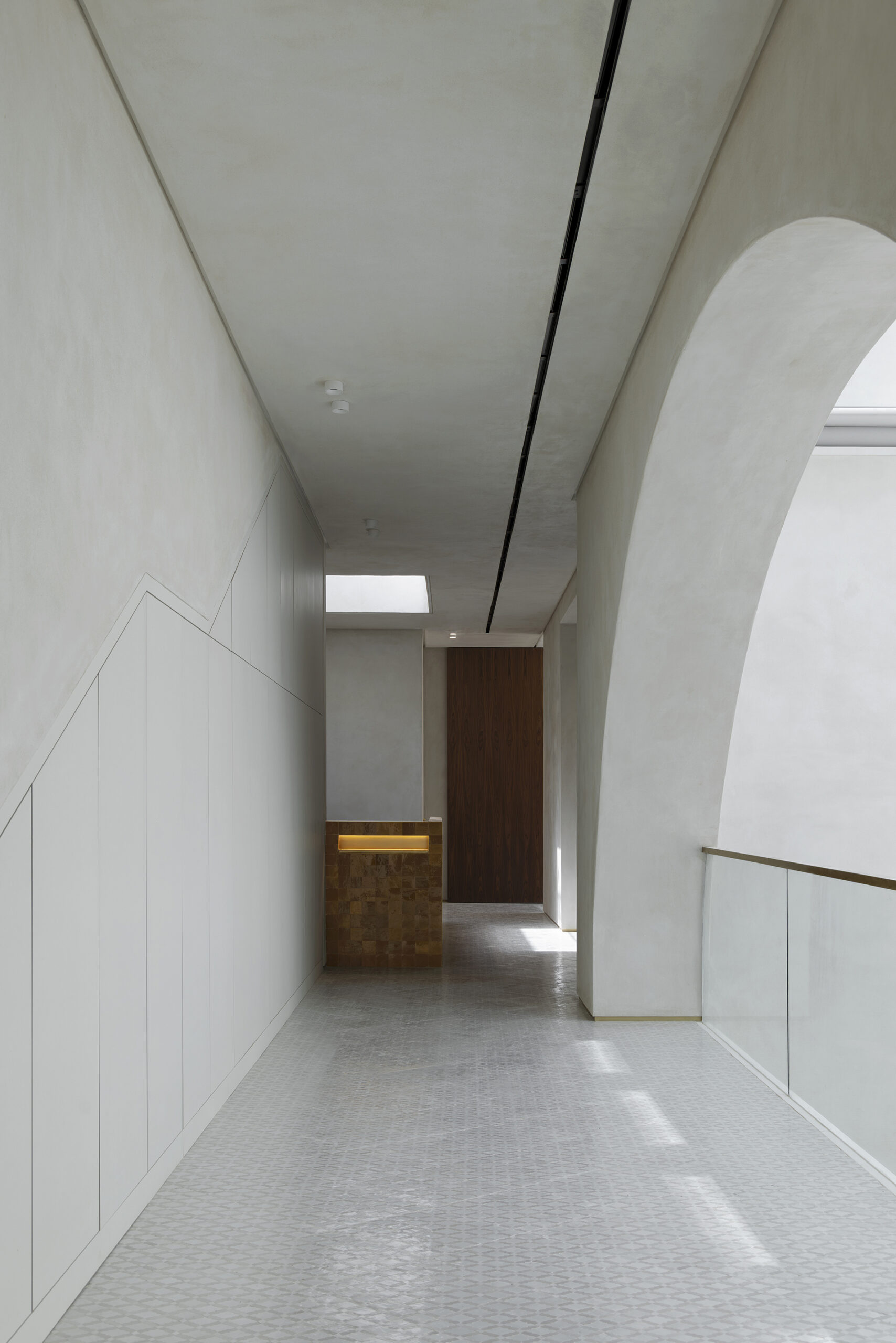
Vertical circulation is conceived as a monumental spatial event. The staircase emerges as a monolithic element, rising through the house as a sculpted volume rather than a purely functional passage.
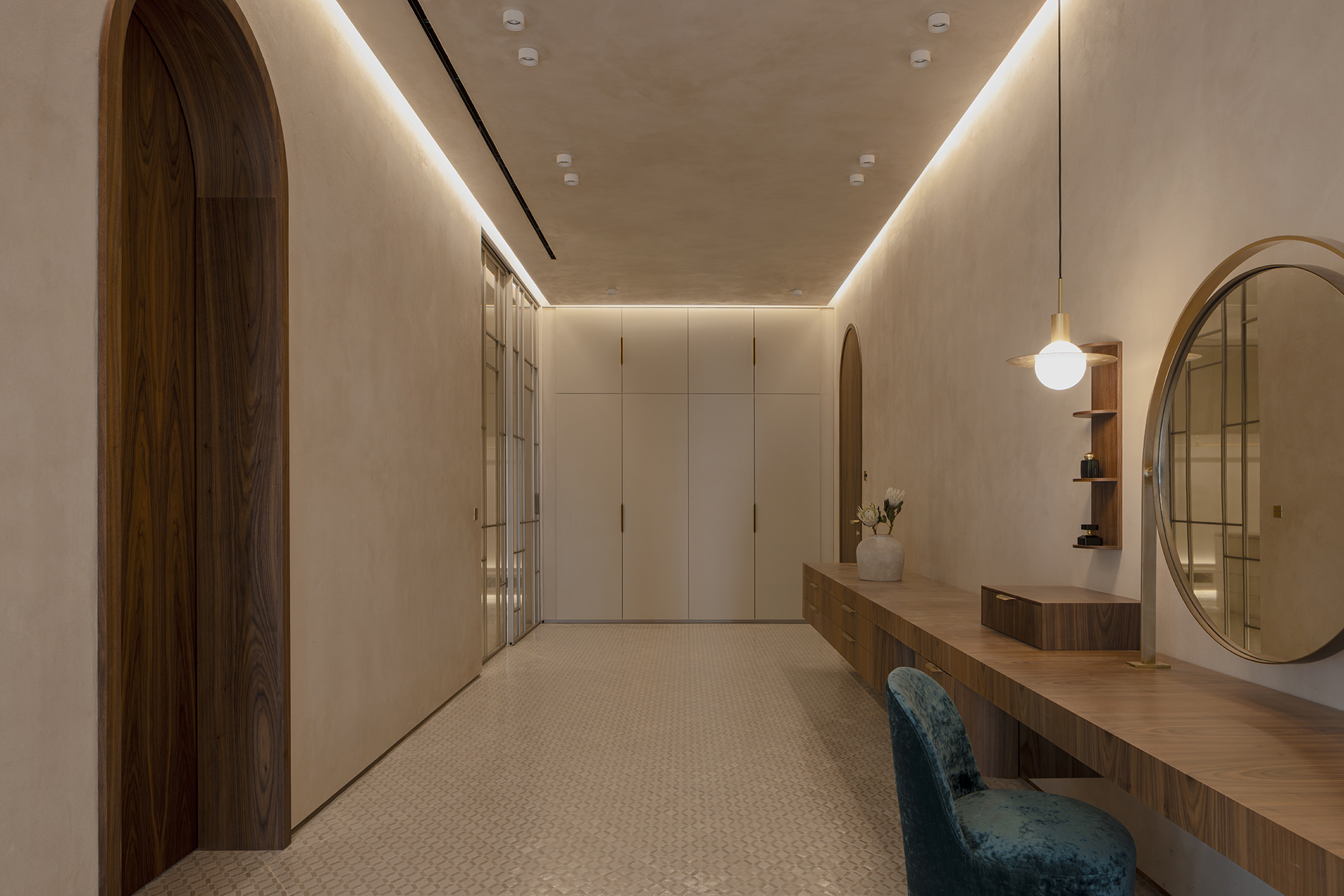
Indirect lighting is integrated to gently wash the walls, enhancing depth and materiality without disturbing visual comfort.
Clad in hand-crafted Moroccan zellij, each tile is cut and finished by hand using natural pigments, giving the surface its distinctive golden–mustard tone. A continuous natural brass handrail completes the composition, reinforcing the sense of movement, weight, and craftsmanship as the stair ascends through the space.
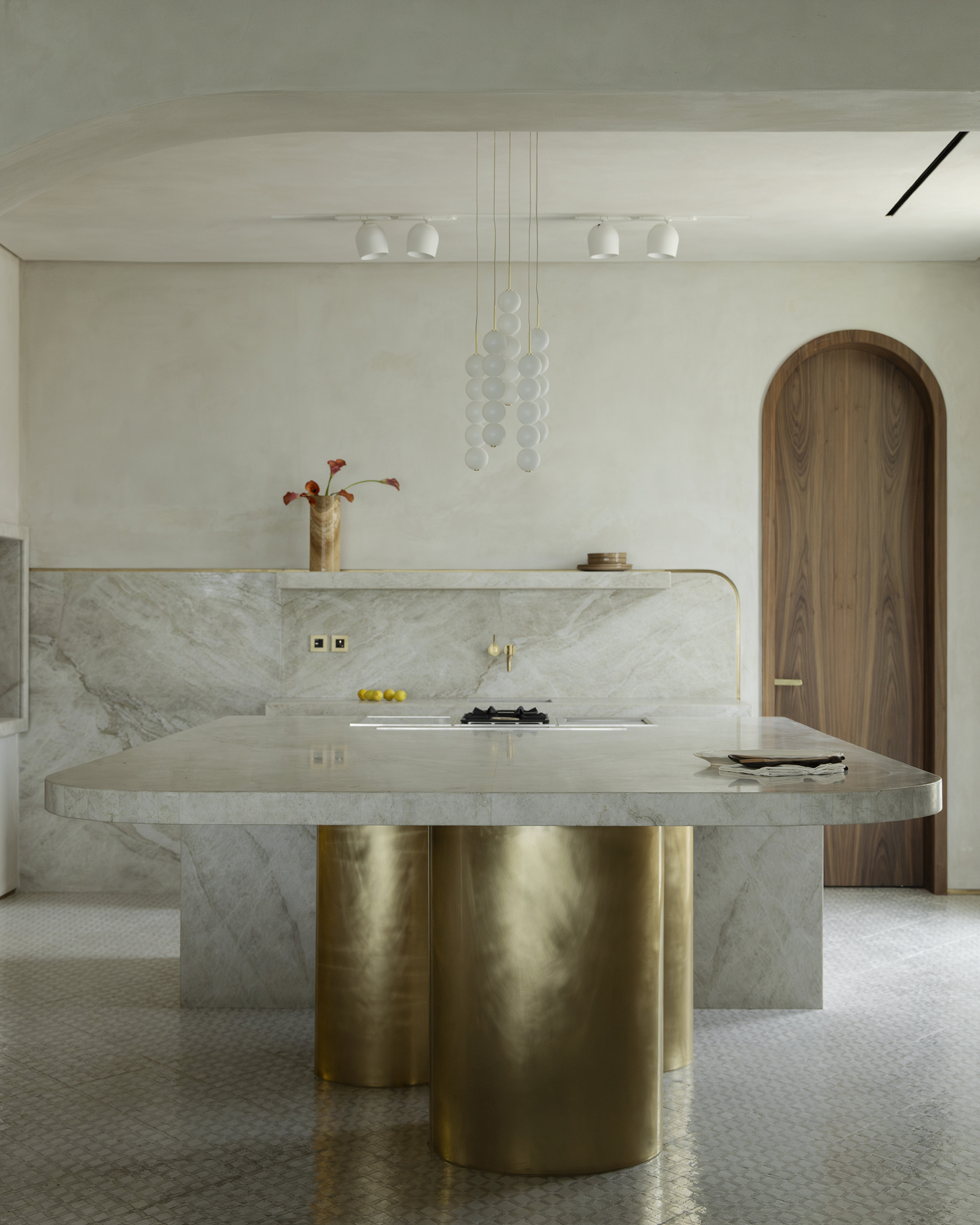
Directly connected to the open kitchen, the dining space functions as a family-support area conceived for daily use and informal gatherings. Preparation, sharing, and living unfold seamlessly, allowing the space to adapt naturally to everyday rituals rather than formal occasions.
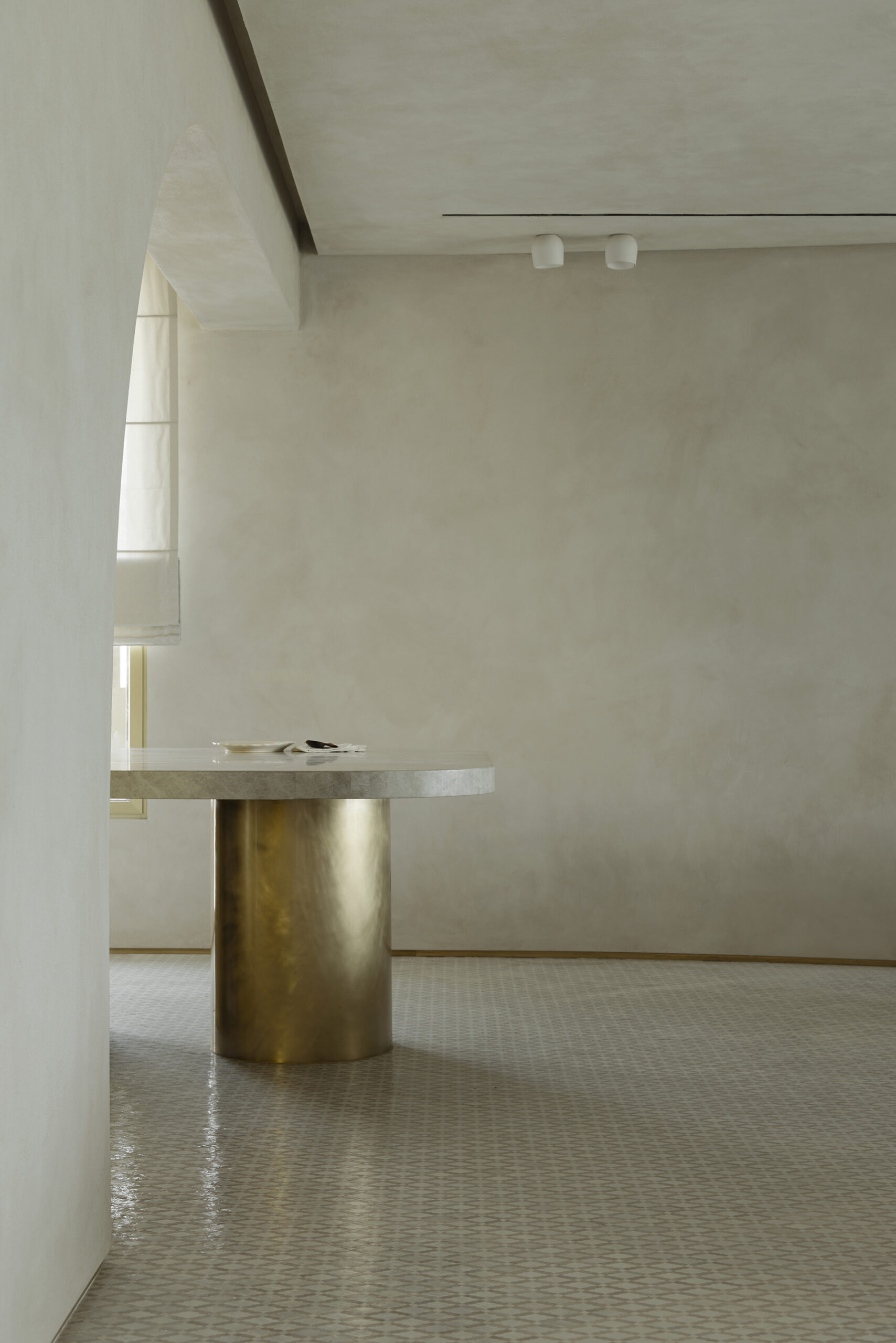
At its center, a bespoke dining table framed in Taj Mahal stone is conceived as a sculptural architectural element rather than a piece of furniture. Supported by three solid cylindrical brass legs, the composition balances material weight and structural clarity, anchoring the space with a quiet sense of monumentality.
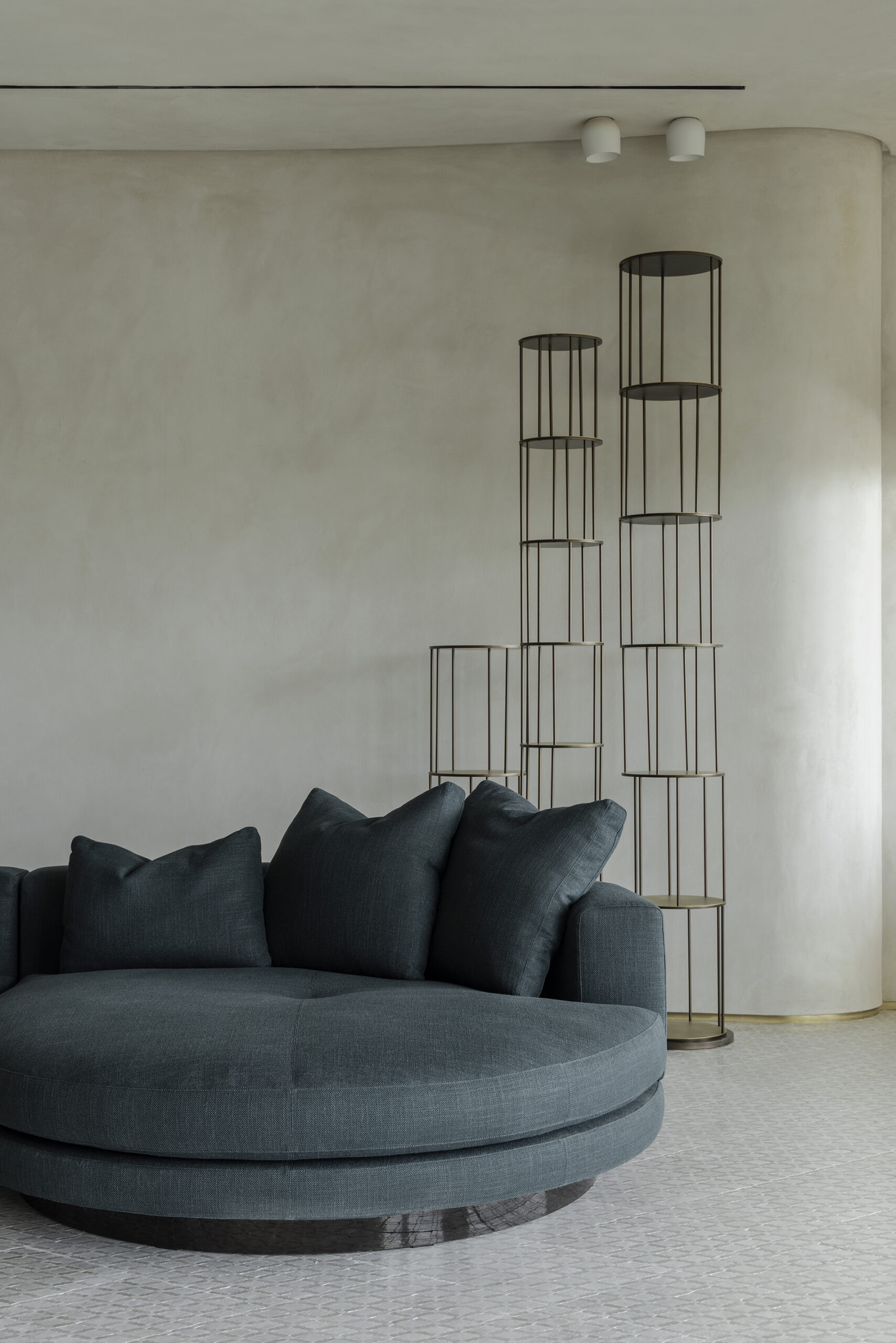
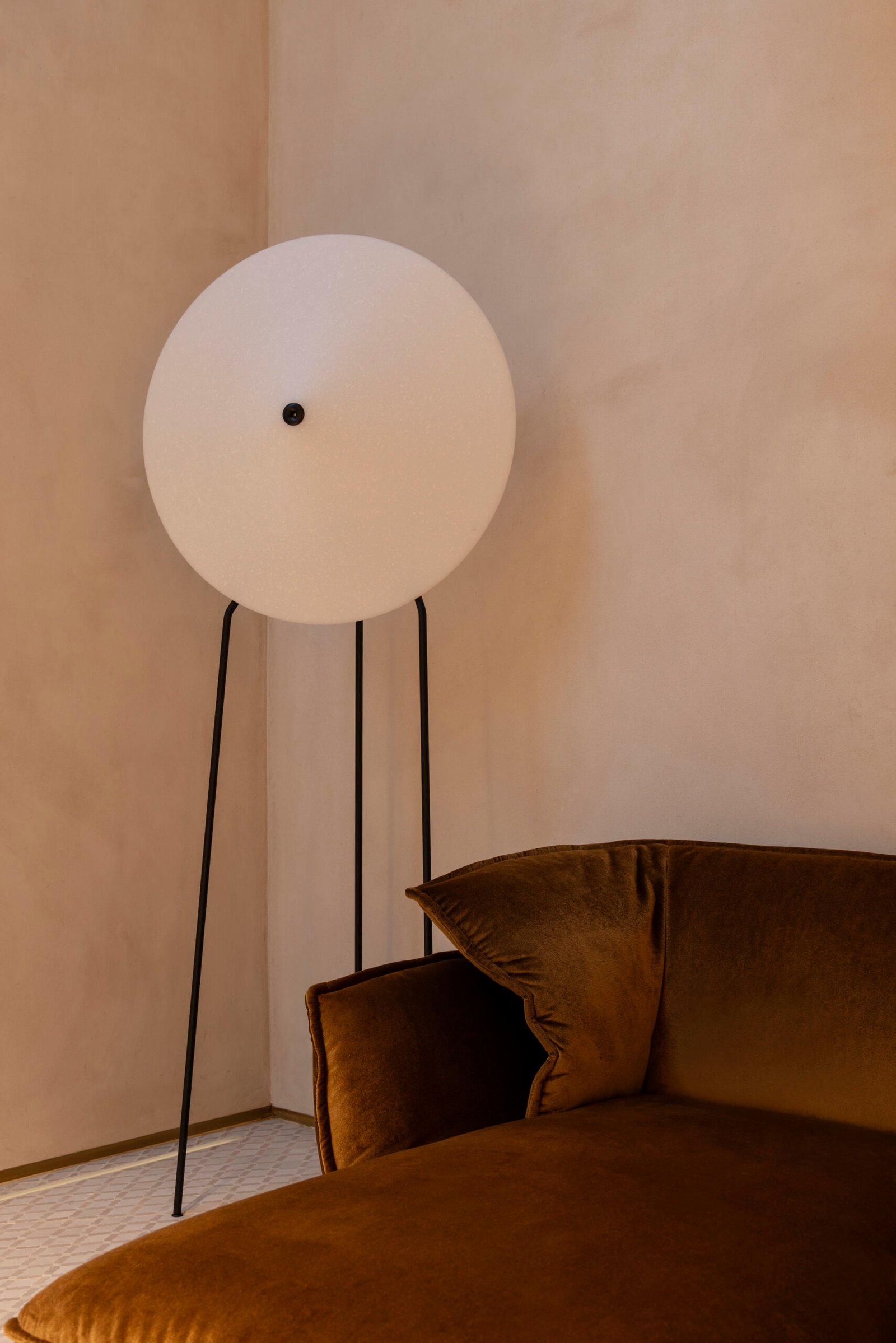
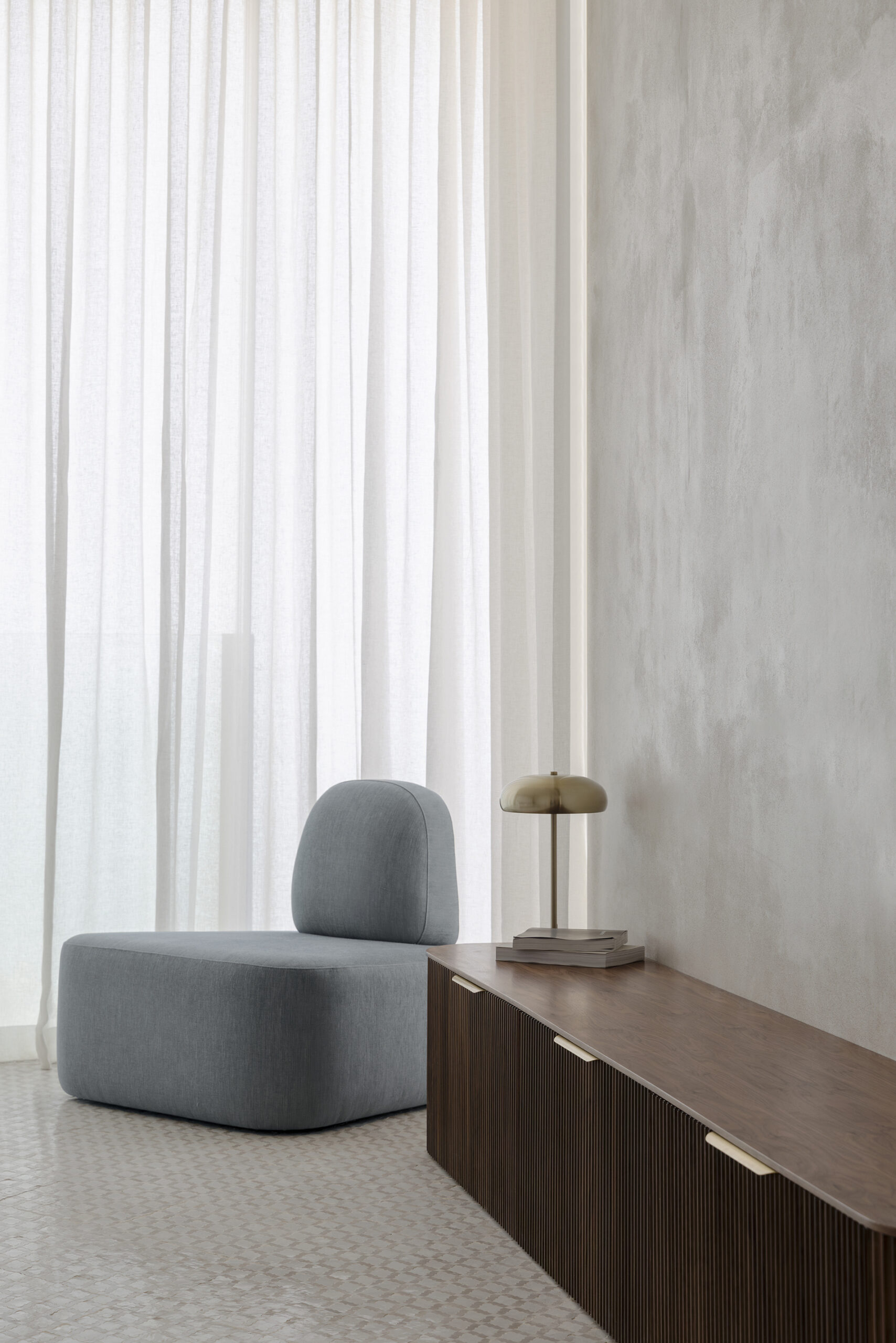
In the adjacent living area, a Minotti sofa introduces softness and comfort, complemented by custom Tatem shelving by De Castelli. Together, these elements create a layered domestic landscape where architecture and furniture engage in a quiet, deliberate dialogue.
between
clay and
handcrafted
tiles.
Sustainability is part of the architectural concept:
Energy
- Photovoltaic solar panels for on-site electricity
- Solar thermal tanks for domestic hot water
- High-efficiency VRF climate control
- High-efficiency COB LED lighting throughout
- Façade sun-detection sensors that automatically adjust lighting scenes to daylight
- Presence detectors to cut unnecessary consumption
Water
- Greywater recovery from showers and taps, reused for landscape irrigation
- Subterranean irrigation that delivers water to roots and reduces evaporation
- Water-saving flow restrictors on all taps
- Grease interceptors in all kitchens to protect the plumbing long-term
Air and ventilation
- Ecological air-filtration unit treating smoke and odours from the basement kitchen before extraction
- Fresh-air recovery integrated into the kitchen hood
Passive design
- Orientation that avoids peak-heat sun exposure, with one blind primary façade and openings on the side elevations and roof
- Automated blinds and curtains driven by time of day and solar position
- Operable custom canopies shading the outdoor areas
- Detailing designed to avoid thermal bridges: 20 cm natural cork on façades and ISO FOAM roof insulation
- Airtight recessed aluminium windows with a 16 mm insulated cavity
- Ultra-clear glazing with a UV-balancing film to control solar gain
- Atrium skylights with multi-layer shading that opens only during a two-hour midday window, using aluminium-backed fabric that reflects heat and lets diffused light through
- Travertine fountain in the atrium, following the Arabian patio cooling tradition
Low-carbon materials
- Cork insulation, which has a negative carbon footprint and is recyclable and biodegradable
- Magnesium boards instead of chemical drywall (non-toxic, fire-resistant, moisture-regulating)
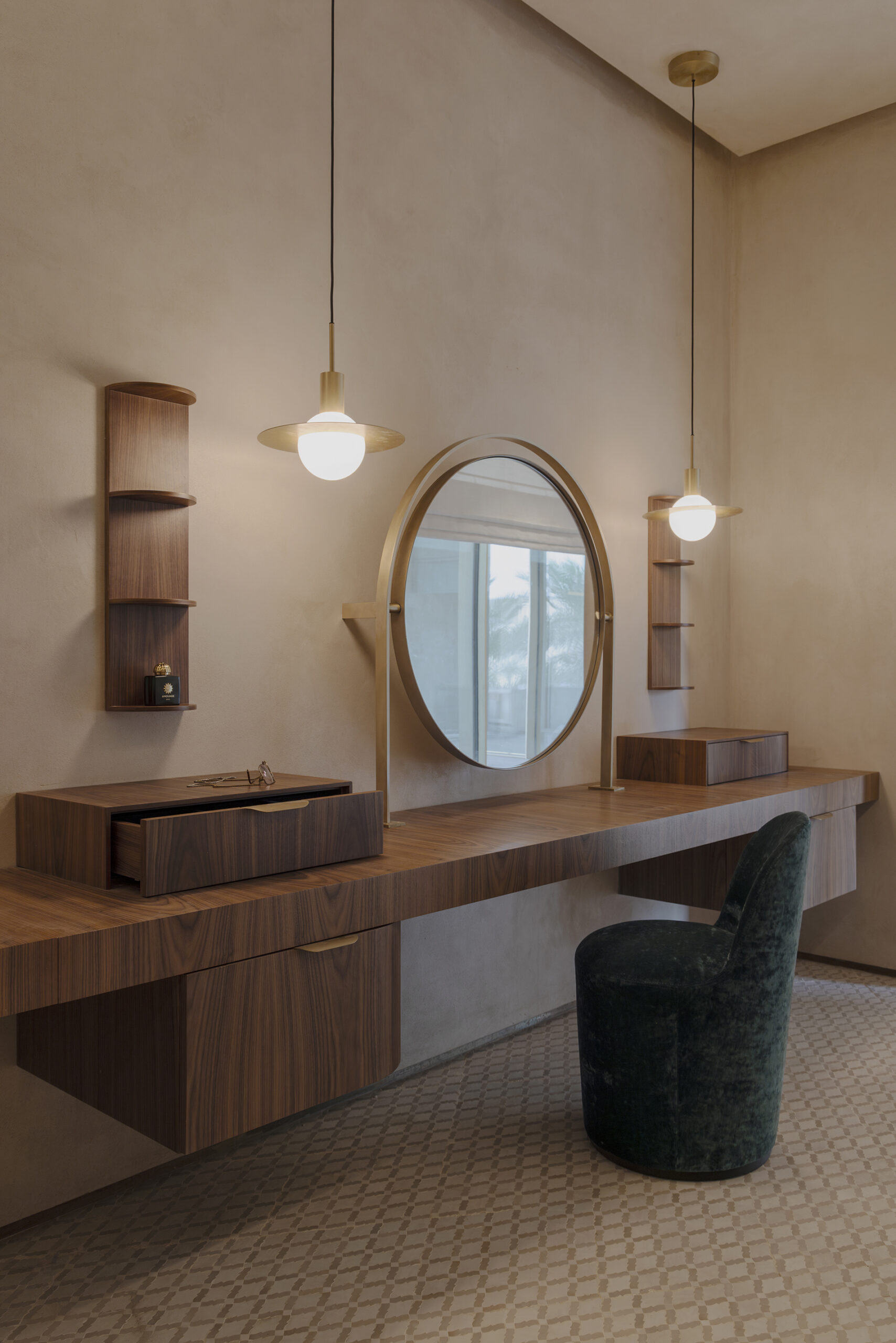
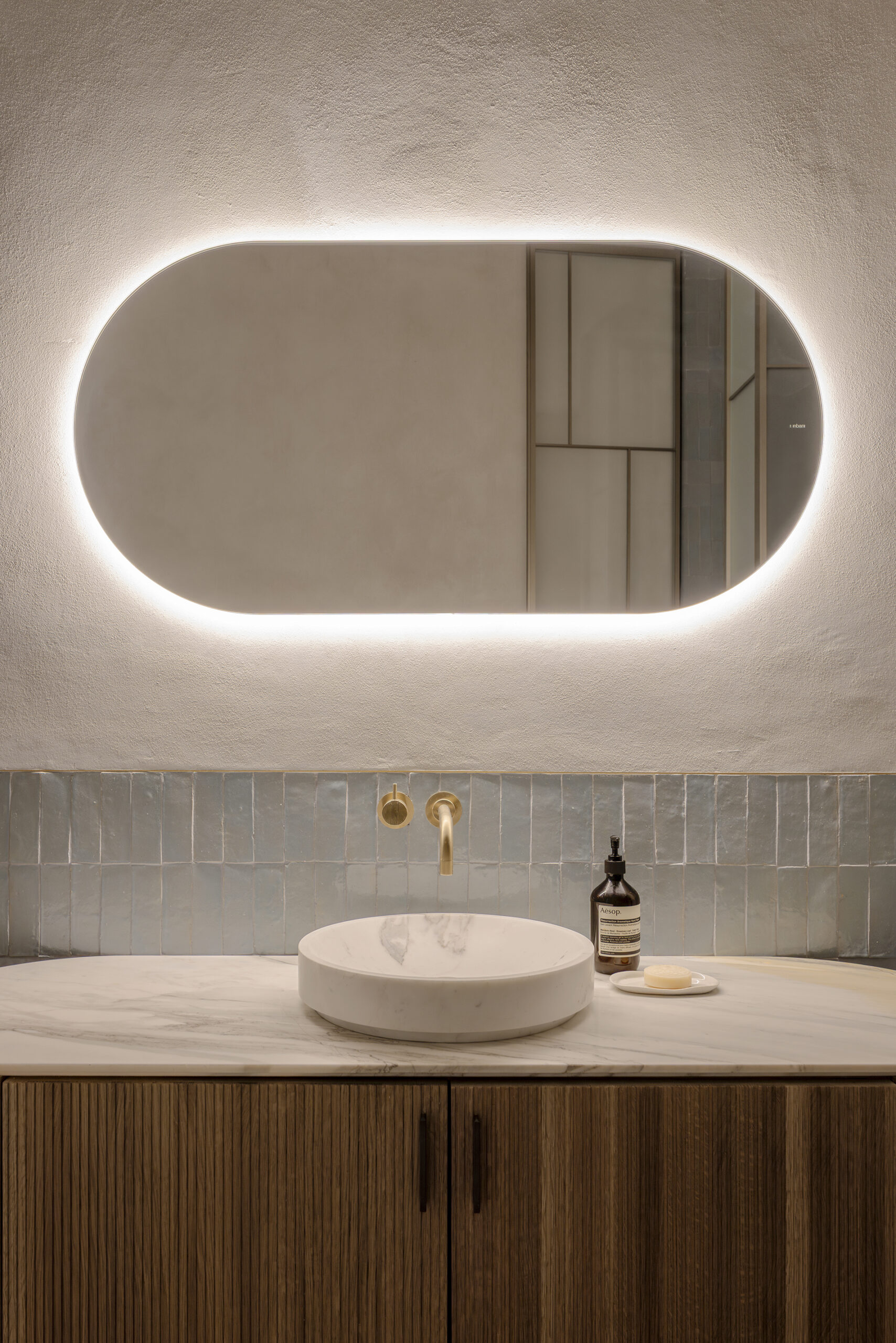
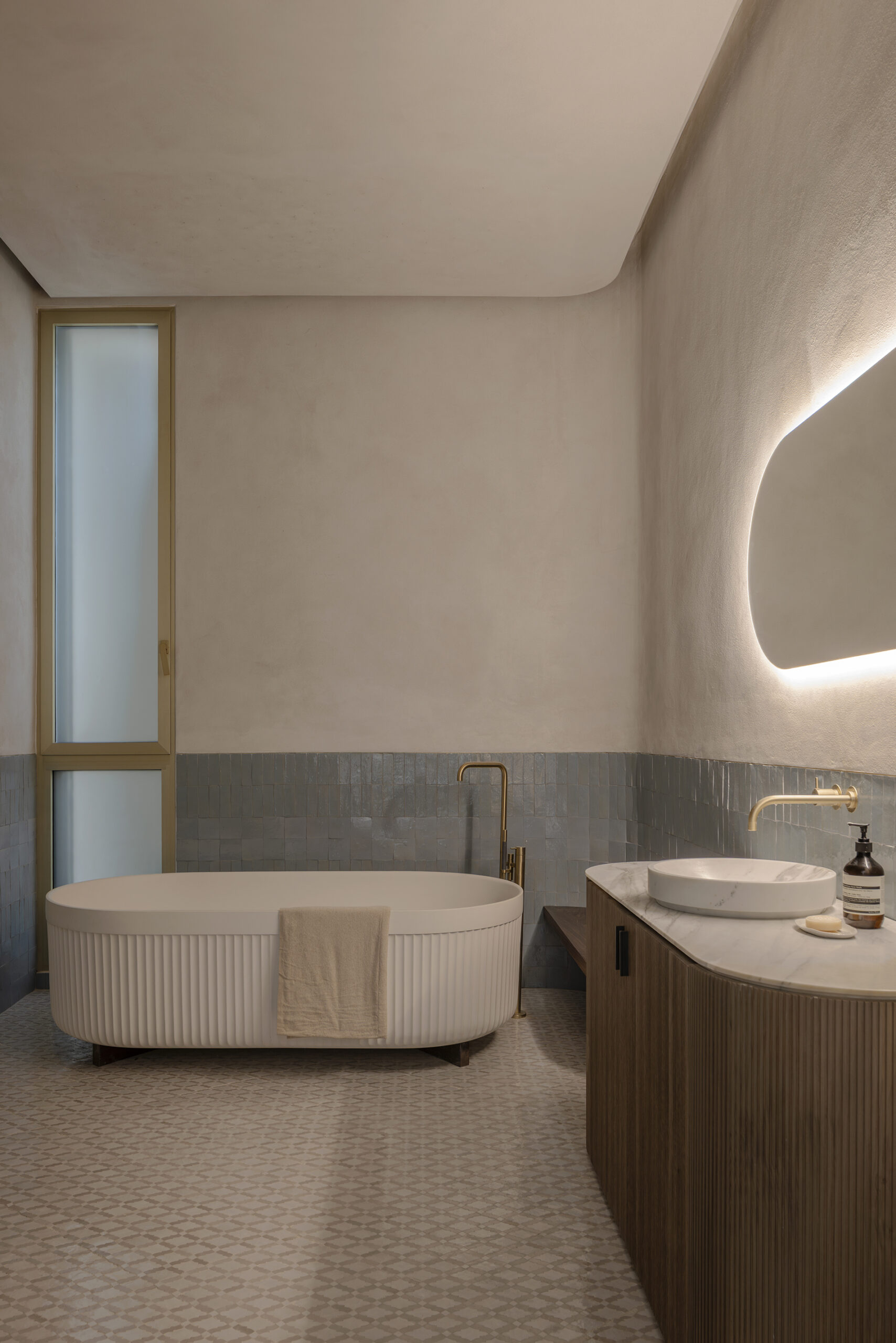
- Handcrafted Moroccan zellij tiles, hand-cut with natural pigments and minimal industrial processing
- Artisanal terracotta tile coloured with natural pigments
- Wood with plywood cores made from fast-growing species
- Natural stone on façades, terraces and pool, chosen for longevity and low lifecycle impact
- All “exclusively sustainable materials,” per the project statement
Wellbeing
-
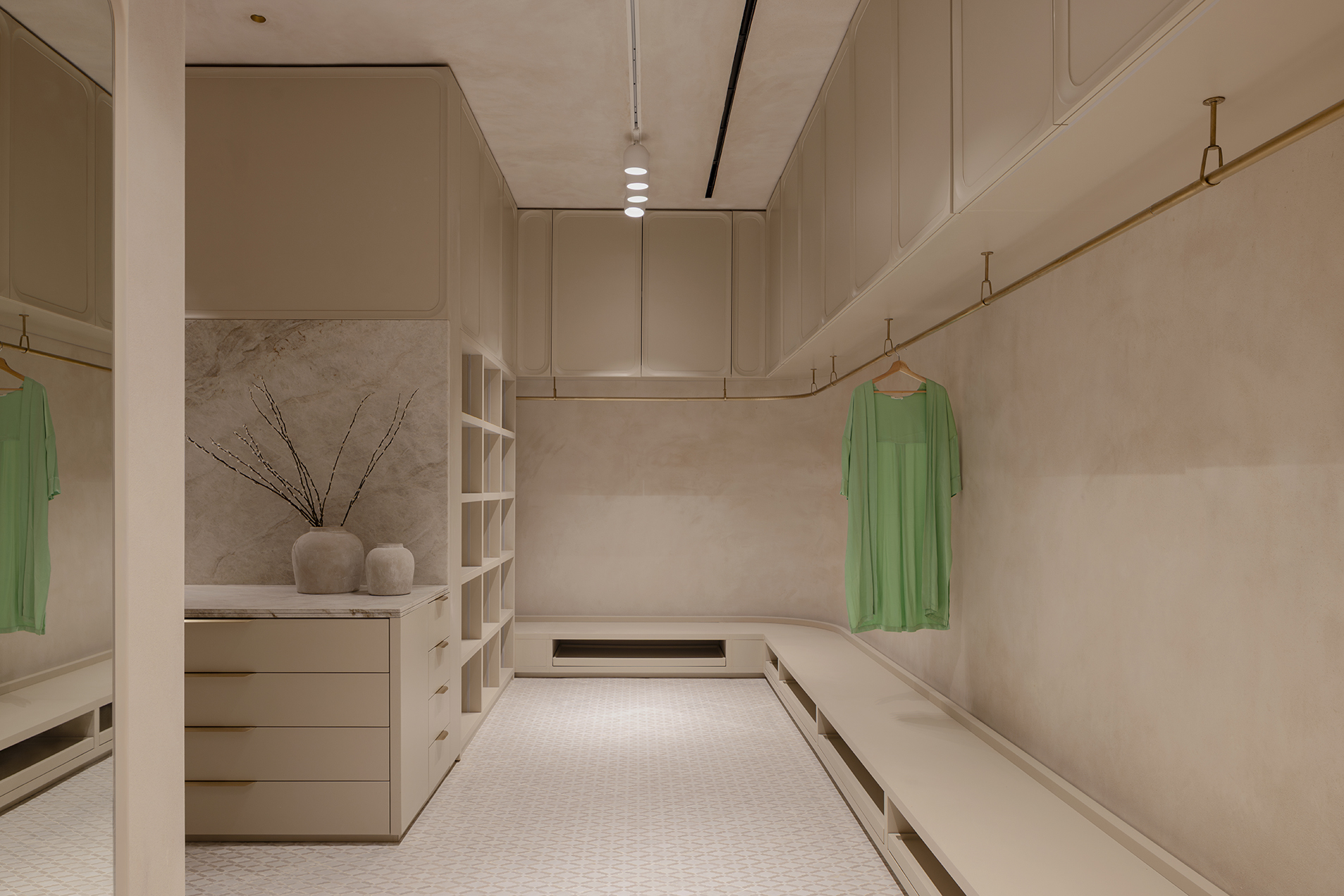
- 2 cm clay render on walls for thermal inertia, humidity regulation and breathability
- Clay and coconut-fibre ceilings that stay vapour-permeable and have low embodied energy
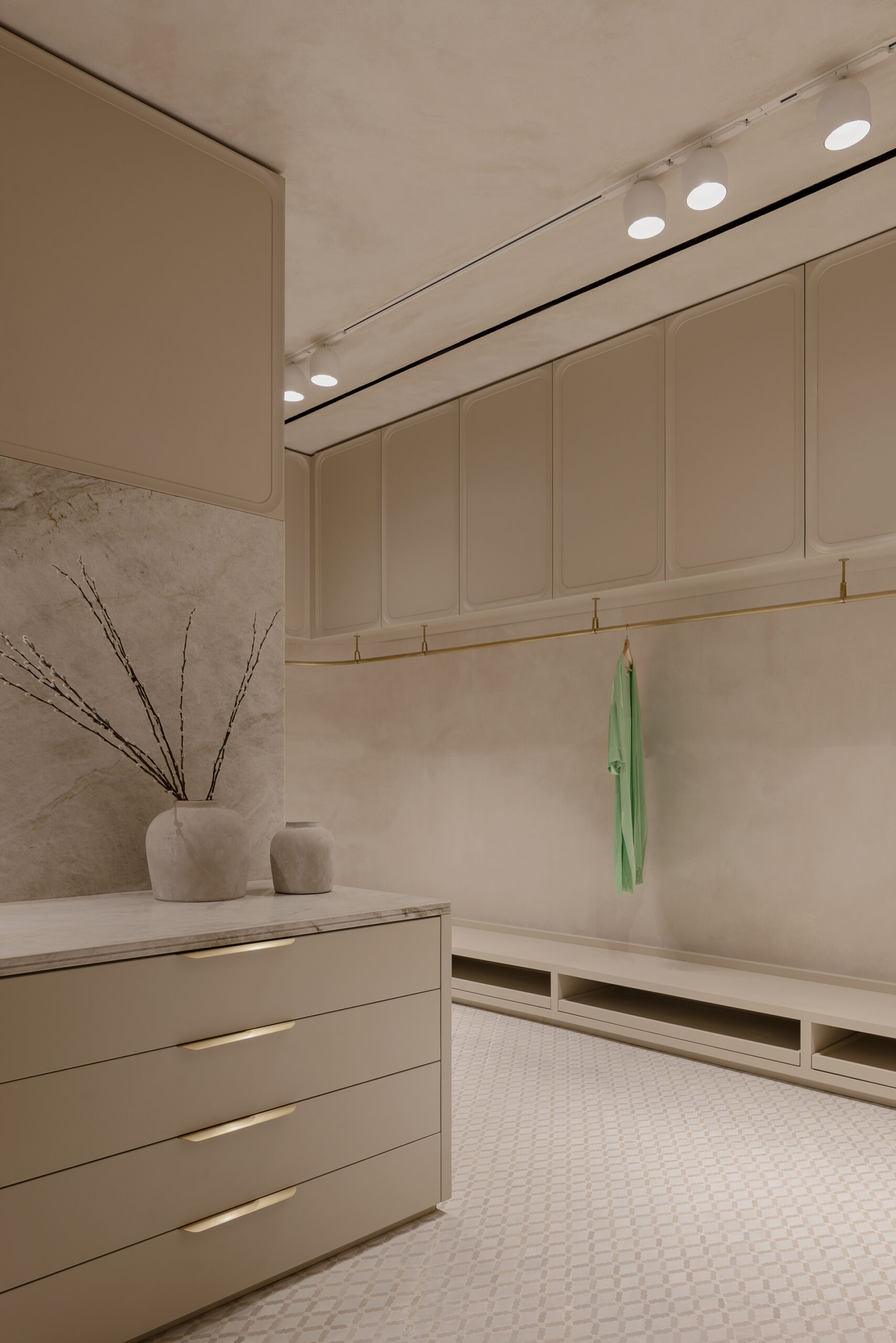
- Clay kept exposed in wardrobes and bathrooms so it can regulate humidity
- Acoustic comfort from the clay finishes, cork and insulated windows
- Copper-based natural pool filtration, with no chlorine or ozone
- Alkaline filtration at every tap
- Indirect and floor-level lighting to avoid glare
- Daylight drawn deep into the ground floor through the atrium
- A meditation room with no natural light, paired with a vitality pool
- Outdoor showers and shaded exterior spaces that extend daily life outdoors
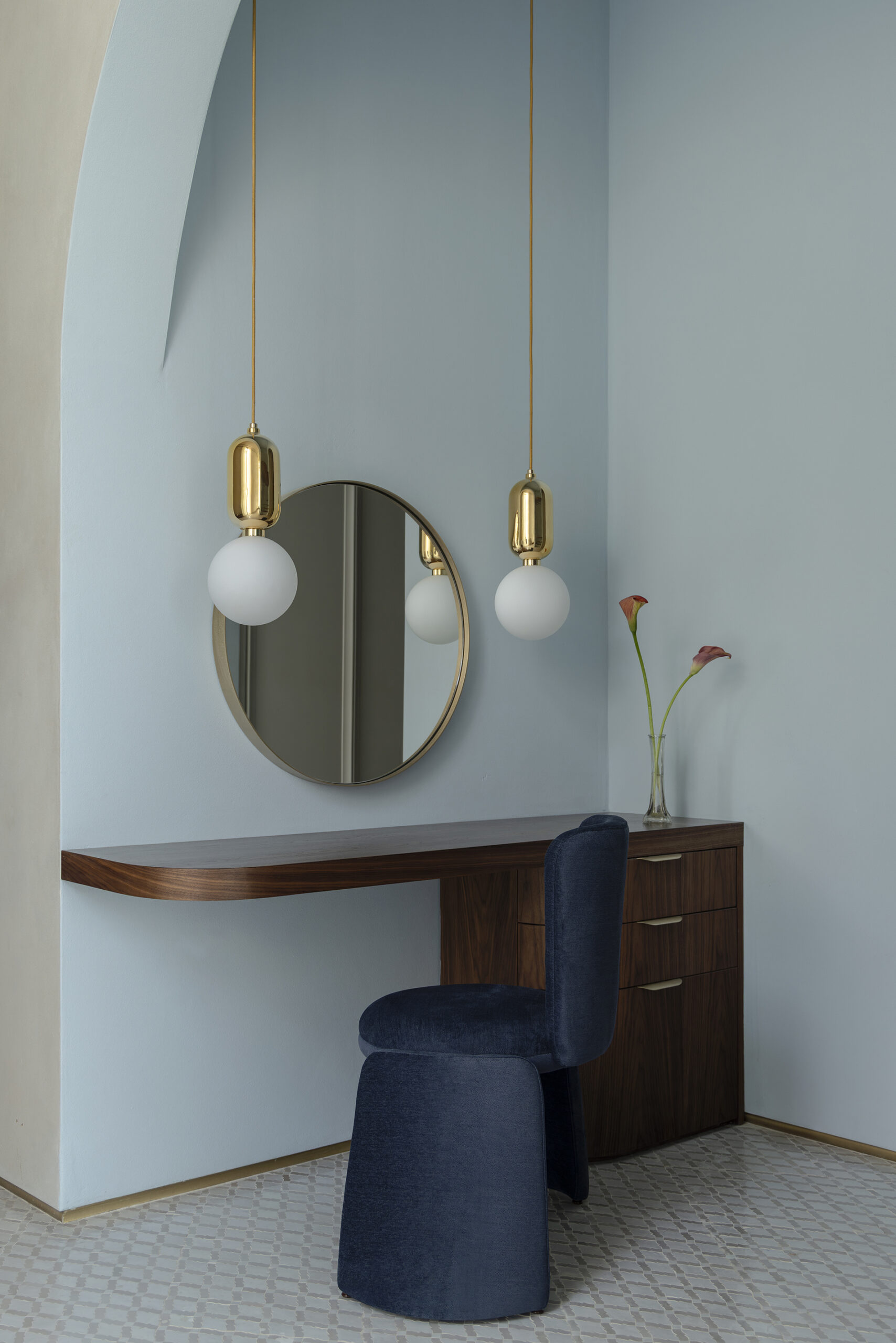
- Calmer, darker white tones in the master suite, and one dominant colour per room to reduce visual noise